
June 2026 NewsletterISSN: 1933-8651
In this issue we present the following articles, news, announcements, and reviews:
News and Announcements
New Books
Poisoned Relations: Healing, Power,
and Contested Knowledge in the Atlantic World
Captive Cosmopolitans: Black Mariners
and the World of South Atlantic Slavery
The Evolution of a Rural Free Black Community:
Goochland County, Virginia, 1728-1832
Mahommah Gardo Baquaqua:
An Enslaved Muslim of the Black Atlantic
Mutiny on the Black Prince: Slavery, Piracy, and the
Limits of Liberty in the Revolutionary Atlantic World
Africulture: How the Principles, Practices, Plants,
and People of African Descent Have Shaped American Agriculture
Sweet Home Feliciana: Family,
Slavery, and the Hauntings of History
Freedom in the Age of Slavery:
A History of Free People of Color in Virginia
Daily Life along the Underground Railroad
Resistance to Slavery in Africa: Past and Present
Settling Debt: Antislavery and Colonial Crisis
Book Review
|
Graduate Programs in African Diaspora Archaeology
By Christopher Fennell

This catalog presents a compiled list of graduate school programs that can provide concentration in African diaspora archaeology. There are currently very few programs that formally offer a graduate degree specializing in this subject area, but there exist many programs that offer graduate degrees in archaeology which have faculty who specialize in African diaspora studies. The list set out below was compiled based on published directories, information provided by the departments, and details sent to the author. This list of programs and of related faculty within each program focuses on the US and UK and is not exhaustive or a full compilation of all departments. Other programs can be found at universities in locations, for example, in the Caribbean and South America. If you are aware of other graduate programs in African diaspora archaeology not listed below, or of additional details concerning those that are listed, please contact the author so he can include such information in future compilations.
[Read or download this full article here in Adobe .pdf format >>>].
[Return to table of contents]
Barbados Prime Minister Announces Manifesto for Slavery Reparations
By Natricia Duncan
Guardian, June 18, 2026
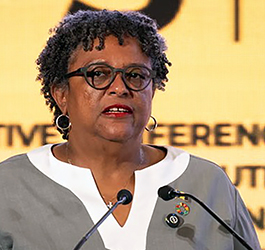
"Barbados’s prime minister, Mia Mottley, has announced a new manifesto from Caribbean leaders asserting the 'moral, ethical and legal case' for reparations over damage caused by hundreds of years of enslavement."
"Mottley was speaking at a 'historic' conference in Ghana to advance the push for reparatory justice after the United Nations adopted a landmark resolution declaring the trafficking of enslaved Africans as the gravest crime against humanity."
"The manifesto, which she distributed at the conference, is an update of the Caribbean Community (Caricom) 10-point plan for reparations from former colonial powers. It introduces new issues including the disproportionate impact of slavery on girls and women."
"The plan includes a new specific call for compensation for gender-based violence, referencing data that suggests 'women represented approximately 30% of the estimated 20 million Africans forcefully transported across the Atlantic Ocean.' It also mentions estimates that at least 1.2 million enslaved women experienced sexual violence."
"Highlighting the update, Mottley said that 'the compensation for gender-based violence and assault on family' is 'no different from the compensation that has been awarded to other nationalities such as the Japanese.'"
"The draft, which has been seen by the Guardian, asserts that climate justice and slavery reparations are 'inextricably linked,' and stresses the need for a plan to support Indigenous people who were in the Caribbean when Europeans arrived and were the subject of genocides."
"The document, which is still to be rubber-stamped by Caribbean governments, makes it clear that Caricom is demanding monetary compensation, in addition to other forms of repair such as a full and formal apology, from Britain and other European countries, and education and training."
[Read the full article online at Guardian news >>>].
[Return to table of contents]
The Inner Worlds of Black Quilters
By Sharbreon Plummer
Hyperallergic, June 18, 2026
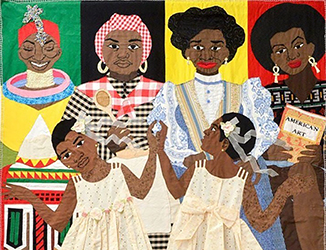
"I am often reminded of the warmth of a quilt at my great-grandmother's house, the weight of wool and polyester patchwork that dared you to try to break free."
"I love being a Black, Southern woman. In this place I call home, we craft networks of 'multisensory culture' -- an existence shaped by the material, visual, and even olfactory. It's the smell of pending afternoon rain. The subtle tinge of red clay dust sprinkled across a crisp white t-shirt on a hot summer day. Even love-worn quilts at the edge of a bed hold layered stories that require spoken word and silent feeling to fully grasp their significance."
"Quilts are a treasure in our cultural inventory. They are forever tethered to the South within Black history but have extended far across boundary lines as we’ve migrated and taken root in new homeplaces. Those privileged enough to own these cherished heirlooms can walk you through the memory that each patch invokes. I am often reminded of the warmth in my great-grandmother’s bed from my childhood; visiting her home meant being nestled into the mattress by the weight of wool and polyester patchwork that dared you to try to break free. To others, quilts, especially in traditional styles, are quietly unassuming and functional. Despite the ongoing recognition of Gee's Bend by some institutions in the art world, quilts still largely represent a bygone era and commitment to labor that feels unimaginable in today's culture of immediacy."
"As a curator and scholar, I find this binary of appreciation between quilt holders and observers intriguing. Cloth is integral to the human experience, and textiles follow us from birth to death. But quilts often meet a split audience, due in part to histories of 'women’s work,' the underappreciation of craft, consumerism and capitalism, and the politics of recognition. I argue that the missing link in achieving broader appreciation of these quilts is a curiosity around and protection of the lineages, aesthetics, and inner worlds of the Black women who make them."
"The study of Black quilts across time and space reveals an archive that would rival most historical texts. From Hystercine Rankin to Faith Ringgold, Black quiltmakers have scripted their experiences and our collective consciousness into worlds of fabric that are only understood, fully, from the inside. My relationship to quilts confirms truths I've known for some time, like that investigations into sovereignty, self-determination, and ancestral reverence aren't defaulted into art school curricula. Instead, they're forged at the feet of our elders, among chosen family and community at a quilt frame."
[Read the full article online at Hyperallergic >>>].
[Return to table of contents]
Bryan Stevenson on Confronting America's Legacy of Slavery
Reveal News: More to the Story, June 17, 2026
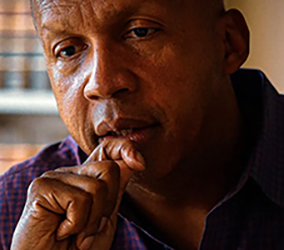
"When Bryan Stevenson moved to Montgomery, Alabama, in the 1980s, the city—one of America's most prominent slave trading spaces before the Civil War—had dozens of Confederate monuments and memorials, but nothing commemorating slavery. Today, thanks to Stevenson's efforts, the city looks much different."
"Over the last decade, the executive director of the Equal Justice Initiative has transformed parts of Montgomery through markers acknowledging the legacy of slavery while also building the Legacy Sites, a series of museums and memorials that commemorate America's dark history of lynching, slaveholding, and racial terror across the South."
“'I'm really proud that we have made Montgomery, Alabama, arguably the most truthful space in America when it comes to confronting the legacy of slavery and the legacy of lynching,' Stevenson says. 'If we can lift up truth in the heart of Dixie, then there's not a place in America that can say, 'Well, they can do that there, but we can't do it here.'"
"On this week's More To The Story, Stevenson talks about the importance of memorializing America's full history as the Trump administration attempts to erase slavery and lynching from the nation's museums and why he sees today's narrative struggle for racial justice as a generational battle."
[Read the full article online at Reveal News >>>].
[Return to table of contents]
A Better World at the Obama Center
By Lori Waxman
Hyperallergic, June 11, 2026
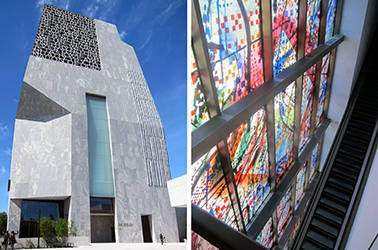
"The new campus is an expression of the former US president's civic ideals, and a reminder of how distant they now seem."
"Chicago — I did not expect to find myself in tears while touring the Obama Presidential Center (OPC). The campus's central building, a nearly windowless 225-foot (~68.6 m) granite tower dubbed the 'Obamalith,' looks from afar exactly like what its nickname promises. And then there's the reality that during President Barack Obama's eight years in office, he vastly expanded and normalized the use of armed drones, wrecked Libya, failed to close Guantanamo Bay, and oversaw record-high ICE deportations."
"And yet, this being Trump's America, visiting the OPC felt like being in an alternate reality. One where people of diverse origin, ability, and belief co-exist peacefully and productively; the value of the environment, public space, human health, and the arts finds expression everywhere, for everyone; and the future appears collaborative and hopeful."
"Structurally, these principles arise from a 19.3-acre (~76,890 sq m) campus designed by architects Billie Tsien and Todd Williams with landscape architect Michael van Valkenburgh. The sustainably planned grounds contain biodiverse gardens, a great lawn, picnic tables, barbecues, a sledding hill, a massive playground, and loads of trails open all day, every day, to the general public. Also free to the public are a state-of-the-art indoor basketball court-slash-community center designed by local Black-owned firm Moody Nolan; a new branch of the Chicago Public Library; and the Forum, featuring extensive common areas, a restaurant, reservable recording studios, and an intimate auditorium. Nearly every space has been named for a person who genuinely deserves the respect, from Nelson Mandela to Hadiya Pendleton, a 15-year-old Chicago honor student killed by a stray bullet just days after performing as a majorette in Obama's second inauguration parade. The undeniably foreboding Museum Tower isn't even all that bad up close, and it works well enough from the inside, with four ascending floors of dynamic exhibits happy to be protected from daylight."
"As in the Obama White House, so in the Obama Presidential Center. Michelle Obama's focus on healthy foods and fit bodies reflects in the expansive vegetable gardens and exercise-forward park facilities. Both Obamas' deep roots in the perennially disinvested South Side of Chicago -- it's where she grew up and he became a community organizer -- explains the choice of location. Their sophisticated support for the arts, including the choicest selection probably ever hung at the White House (digitally recapped in a display on Level 4 of the museum), continues with a prominent series of art commissions spread out across the campus, indoors and out, most of it freely accessible, almost all of it very good, comfortably contemporary, temperamentally on-brand, and totally uncontentious."
[Read the full article online at Hyperallergic >>>].
[Return to table of contents]
Black Burial Grounds Are Disappearing as Families Fight to Protect Them
By Adam Mahoney
Capital B News, June 8, 2026
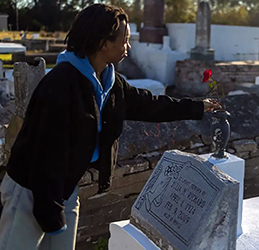
"A genealogical search led to a national struggle to protect historic Black cemeteries from neglect, development, and white supremacist vandalism."
"The first time Terry O'Neal walked into an old cemetery, she found splintered coffins pushed up by storms and time, with 'skeletons sitting outside of caskets.' In Chloe, Louisiana, the acre that holds generations of Black, Creole, and Indigenous families looked more like an abandoned field than a resting place, she recalled."
"The neglect in death felt intentional to her, and increasingly more urgent as attacks on Black burial grounds have spread across the South in recent years."
"'Black achievements and our lives have been stolen and hidden since the beginning of this country,' she said. 'It is like we are not meant to know our greatness.'"
"As Black burial grounds have been paved over, sold off, or left to disappear under weeds, across the South, Black people learn early that death does not guarantee rest. In the same vein, Black love -- and responsibility -- does not stop at the grave. O'Neal is among a growing network of hundreds of Black people doing the work of saving historic, and often forgotten, cemeteries."
"Descendants are organizing cleanups, filing lawsuits, and pressing cities to acknowledge the dead beneath their feet."
[Read the full article online at Capital B News >>>].
[Return to table of contents]
New Exhibit Explores 400 years of African Nova Scotian Seafaring History
CBC News, May 31, 2026
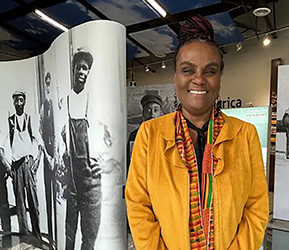
"A new travelling exhibit is exploring 400 years of maritime history to tell the stories of African Nova Scotian seafarers."
"The exhibition, titled 'We and the Sea,' launched Saturday at the Black Loyalist Heritage Centre in Birchtown, N.S. Dozens of community members, descendants and dignitaries attended the opening."
"'The project shines a light on a history that has largely remained absent from historical accounts of the marine industry, said Russell Grosse, the executive director of the Black Cultural Centre for Nova Scotia.
"For many years the community has been defined by enslavement, and that enslavement has created a reference point where people are reticent to share their history,' Grosse said."
"'Things like this create an opportunity where we can turn that page and show that ... through the atrocities of enslavement, there were contributions made to society.'"
"Andrea Davis, the executive director of the Black Loyalist Heritage Centre and an eighth-generation Black Loyalist descendant, called the launch a historic moment."
"'This is a human story and this is a story that we're exposing not to push in anyone's face, but to have the community recognize that this industry has been around for a very long time,' Davis said."
"The project has been in development for four to five years."
"Davis said she wants students to remember that 'Black history is Canadian history.'"
[Read the full article online at CBC News >>>].
[Return to table of contents]
How an Enslaved, Shipwrecked African Became the US's First Great Explorer
By Eliot Stein
BBC News, May 28, 2026
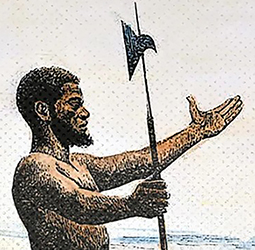
"Nearly 500 years ago, a Moroccan man travelled thousands of miles from Florida to the Pacific Coast, becoming the first known outsider to see the American West."
"In 1528, a man from Morocco washed up on the coast of present-day Texas, more dead than alive. He had spent the previous month adrift in the Gulf of Mexico alongside a group of Spanish sailors on a flimsy lifeboat lashed together with tree trunks, horse hide and what was left of their tattered clothes. When a storm stranded the castaways on a barrier island near Galveston, they unwittingly became the first people from the Old World to enter the American West -- and when they did, they were each starving, exhausted and naked."
"In the weeks that followed, the shipwrecked survivors began dying, one by one. Many succumbed to hunger, others to the elements and some to attacks from Indigenous tribes. Of the roughly 600 men who had set sail from Spain a year earlier on this ill-fated expedition to conquer present-day Florida and the Gulf Coast for the Spanish Crown, only four survived: three Spanish captains and, somehow, the enslaved Moroccan."
"During the next eight years, the man would become the party's de facto leader, and embark on one of the most remarkable survival journeys in exploration history. And yet, we don't even know his real name."
"Known variously as Esteban de Dorantes, Esteban the Moor or -- most commonly -- Estevanico, this enigmatic individual was one of the first documented Africans, Arabic speakers and Muslims to step foot in what is now the United States, arriving nearly 40 years before the first European settlement. Between 1528 and 1536, he walked roughly 2,250 miles (3,620km) west from Florida to the Pacific Coast of Mexico, completing what is widely believed to be the first recorded crossing of North America in history and predating Lewis and Clark's overland expedition to the Oregon Coast by nearly 300 years."
"Along the way, Estevanico was captured by Native Americans, learned their languages and became a healer before journeying an additional 1,300 miles (2,090km) south with the three other shipwreck survivors from the Gulf of California to Mexico City. He then embarked on a separate 1,500-mile (2,415km) odyssey north, and became the first known non-Native American to enter modern-day New Mexico and Arizona."
[Read the full article online at BBC News >>>].
[Return to table of contents]
Pope Leo XIV Makes Historic Apology
for Vatican's Role in Legitimizing Slavery
By Nicole Winfield and Paolo Santalucia
AP News, May 25, 2026
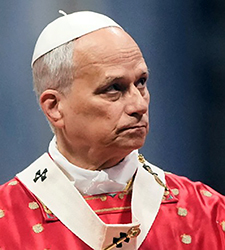
Vatican City (AP) — "Pope Leo XIV made a historic apology on Monday for the Holy See’s role in legitimizing slavery and for having failed to condemn it for centuries, calling the Vatican’s record a 'wound in Christian memory.'"
"Past popes have apologized for Christians’ involvement in the trans-Atlantic slave trade. But no pope had ever publicly acknowledged, much less apologized for, the role that past popes played in giving European sovereigns explicit authority to subjugate and enslave 'infidels.'"
"History's first U.S.-born pope, whose family history includes both enslaved people and slave owners, delivered the apology in his first encyclical, 'Magnifica Humanitas,' (Magnificent Humanity), which was released Monday."
"The sweeping manifesto is about safeguarding humanity in an era of increasing reliance on artificial intelligence. Leo raised the slave trade in relation to what he called the new forms of slavery and colonialism that the digital revolution is fueling."
[Read the full article online at AP News >>>].
[Return to table of contents]
Open Access Articles from the
Journal of African Diaspora Archaeology and Heritage
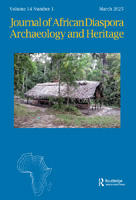
The Journal of African Diaspora Archaeology and Heritage (Taylor & Francis Press) includes open access articles. You can find these on the journal website (link). Examples of articles currently available with free access include:
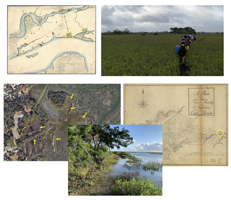
"Waiting on the Tide: Climate Change, Cultural Heritage, and Legacies of Anti-Blackness at Fort Mose," by Mary Elizabeth "Liz" Ibarrola. Abstract: Colonial Florida was a legal and jurisdictional borderland, within which many Afro-diasporic peoples negotiated to best protect their freedoms. However, they also found that emergent ideas about race were shaping the negotiation, circumscribing their options, and working to define a marginalized position for them within Florida society. The site of Fort Mose exemplifies this history and the challenges confronted by Afro-diasporic people within it. Furthermore, the threats to heritage preservation currently faced at the site highlight the ways which anti-Black ideology and action have had a persistent effect on the site, from its inception through the present day. Fort Mose was vulnerable by design. While it is today recognized for its symbolic role in the colonial era, as a site of Black heritage it is threatened not only by rising sea levels and increased storm activity, but also a historical legacy of marginalization. Keywords: Florida, climate change, environmental racism, African diaspora, cultural heritage (article link).
"We Remember Through the Spirit: Yoruba Intangible Heritage, Diasporic Belonging, and the Cultural Work of Aladura Churches in the UK," by Anna Catalani. Abstract: This paper explores how Aladura Churches sustain, adapt, and mobilize Yoruba intangible heritage – understood as oral traditions, rituals, music, and dance – to foster cultural identity and decolonial belonging in diasporic settings. Emerging in twentieth-century Nigeria and now established in the UK, Aladura Churches use heritage practices both as faith expressions and as tools for identity-building, continuity, and resilience. The article has two aims: first, to examine how these traditions are reinterpreted transnationally, reshaped to meet the spiritual and social needs of diasporic communities; and second, to assess how Aladura Churches' digital platforms function as spaces of cultural resistance, challenging marginalization and asserting diasporic identities. The paper argues that by integrating Yoruba heritage into sacred and civic life, Aladura Churches engage with global discourses on decolonization, multicultural citizenship, and heritage preservation. By doing so, they offer a decolonial model of heritage that reclaims memory, redefines legitimacy, and broadens cultural recognition in contemporary Britain. Keywords: Yoruba intangible heritage, Aladura churches, diasporic cultural resilience, decolonial heritage discourse, UNESCO intangible heritage convention, diaspora studies, religious practices, community heritage preservation (article link).
"Introducing African Mobilities and Heritage in the Indian Ocean World," by Shihan de Silva Jayasuriya. Abstract: As the United Nations International Decade for People of African Descent was approaching its end (2015–2024), the contributing authors were invited to write articles in order to complement its pillars: Recognition, Justice and Development. Whilst the articles were in progress, the UN adopted a second decade recognizing work that needed to be completed in order to address the full human rights of people of African descent. Recognition of People of African descent in the Indian Ocean World emanating from involuntary migration is a crucial part of bringing about justice. Building our episteme of African migrations continues as we enter the Second International Decade for People of African Descent (2025–2034). Keywords: African Heritage, Indian Ocean region, slavery, marronage, Sri Lanka, military, labour, abolition (article link).
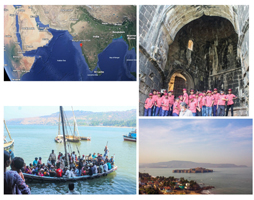
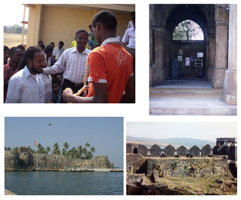
"Island Fort Janjira: Living Memories and Heritage," by Beheroze Shroff and Sonal Mehta. Abstract: An independent princely state (1621-1948), Janjira Fort and extended territories on the West Coast of India were governed by African Muslim rulers called Nawabs. This paper explores Janjira as a centre of trade and heritage tourism. We discuss protecting the Fort's cultural heritage and legacy of cosmopolitan communities who lived and worked in Janjira for generations. Our research is based on oral narratives and vivid memories of Indians of diverse backgrounds who served the Nawabs. History lives in their reflections of Janjira, as a unique place of the cultural formation of a microworld, arising from global processes of trade and commerce which defined its diverse racial and ethnic composition. We also offer the perspectives of descendants of the last Nawab of Janjira State. We conclude that Janjira Fort and the tombs of the Nawabs are heritage structures, an integral part of African History in India and need urgent attention for their preservation. Keywords: Sidis, Janjira Fort, living memories, heritage and tourism, cosmopolitanism, Indian Ocean (article link).
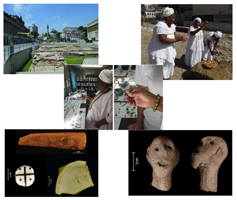
"Valongo, the Place of the Ancestors: Spiritual Practices among Enslaved Africans in Nineteenth-century Rio de Janeiro," by Tania Andrade Lima. Abstract: In 2017, UNESCO added Valongo Wharf to its list of World Heritage Sites. Located in Rio de Janeiro's Port Zone, the wharf is a place of memory associated with the transatlantic slave trade, which has been compared to other sites that have witnessed intense human suffering, such as Auschwitz, Hiroshima and Gorée Island, among others. This chapter explores the spiritual practices of the "wretched of the Earth," as Frantz Fanon named those Africans dehumanized by European colonialism. More specifically, it focuses on the Africans shipped to Valongo to be sold as slaves in Rio de Janeiro and who left vestiges of their spiritual beliefs, recovered through archaeological research. Here, these remains are analyzed from a decolonial perspective, born from the reflections of critical Latin American thinkers who reject the diverse forms of domination and oppression inflicted by Northern hemisphere powers on subaltern populations of the global South. Keywords: Valongo Wharf, urban slavery, spiritual beliefs, decolonial thought, diasporic communities, historical archaeology, archaeology of the African diaspora, descendant communities (article link).
[Return to table of contents]
Call for Proposals:
Restorative Justice in Heritage Studies & Archaeology
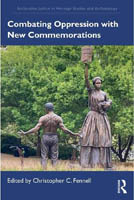
The Restorative Justice in Heritage Studies and Archaeology book series, published by Routledge Press and edited by Richard Paul Benjamin (University of Liverpool), Christopher C. Fennell (University of Illinois), and Nedra K. Lee (University of Massachusetts), seeks proposals for single-author, multi-author, or edited books. Restorative justice in heritage and archaeology embraces initiatives for reconciliation of past societal transgressions using processes that are multivocal, dialogic, historically informed, community based, negotiated, and transformative. This series will present works that promote the active and often unconventional ways that archaeologists, historians, and heritage scholars are contributing to a process of remaking. Our authors work to define and illuminate the best practices for restorative justice in these fields and to identify how practitioners and their collaborators are working to redress, reconcile, and remake contemporary society.
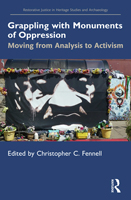
Such restorative justice efforts typically focus on multiple perspectives and modes of reconciliation, rather than a narrow vision of retribution and punishment. Reparation initiatives are often multivocal, layered, multiplex, and visionary in this way. Restorative justice initiatives often occur through such a collaborative process which entails relationship building and story-telling, accountability and truth-telling, and reparative engagement.
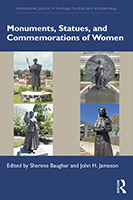
Our first volumes in the series are Grappling with Monuments of Oppression: Moving from Analysis to Activism (link), Combating Oppression with New Commemorations (link), and Monuments, Statues, and Commemorations of Women (link). Other volumes under contract and preparation address "archaeologies with heart" and justice and critical heritage issues in South Asia.
Interested in proposing a book for this series? Contact one of us: Nedra.Lee@umb.edu, Richard.Benjamin@liverpool.ac.uk, or cfennell@illinois.edu.
General guidelines for authors are available from Routledge Press.
Follow this initiative through our website, and on Facebook.
[Return to table of contents]
New Book
Poisoned Relations: Healing, Power,
and Contested Knowledge in the Atlantic World
By Chelsea Berry
University of Pennsylvania Press
272 pp., ISBN: 978-1512826494, 2024.
Description from the Publisher:
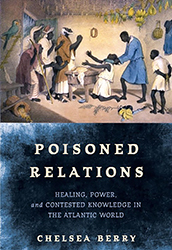 By the time of the opening of the Atlantic world in the fifteenth century, Europeans and Atlantic Africans had developed significantly different cultural idioms for and understandings of poison. Europeans considered poison a gendered "weapon of the weak" while Africans viewed it as an abuse by the powerful. Though distinct, both idioms centered on fraught power relationships. When translated to the slave societies of the Americas, these understandings sometimes clashed in conflicting interpretations of alleged poisoning events.
In Poisoned Relations, Chelsea Berry illuminates the competing understandings of poison and power in the Atlantic World. Poison was connected to central concerns of life: to the well-being in this world for oneself and one's relatives; to the morality and use of power; and to the fraught relationships that bound people together. The social and relational nature of ideas about poison meant that the power struggles that emerged in poison cases, while unfolding in the extreme context of slavery, were not solely between enslavers and the enslaved -- they also involved social conflict within enslaved communities.
Poisoned Relations examines more than five hundred investigations and trials in four colonial contexts -- British Virginia, French Martinique, Portuguese Bahia, and the Dutch Guianas -- bringing a groundbreaking application of historical linguistics to bear on the study of the African diaspora in the Americas. Illuminating competing understandings of poison and power in this way, Berry opens new avenues of evidence through which to navigate the violence of colonial archival silences.
[Return to table of contents]
New Book
Captive Cosmopolitans: Black Mariners
and the World of South Atlantic Slavery
By Mary E. Hicks
Omohundro Institute and UNC Press
432 pp., ISBN: 978-1469671468, 2024.
Description from the Publisher:
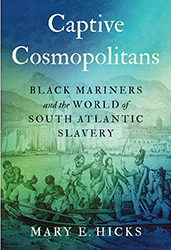 From the bustling ports of Lisbon to the coastal inlets of the Bight of Benin to the vibrant waterways of Bahia, Black mariners were integral to every space of the commercial South Atlantic. Navigating this kaleidoscopic world required a remarkable cosmopolitanism -- the chameleonlike ability to adapt to new surroundings by developing sophisticated medicinal, linguistic, and navigational knowledge. Mary E. Hicks shows how Portuguese slaving ship captains harnessed and exploited this hybridity to expand their own traffic in human bondage. At the same time, she reveals how enslaved and free Black mariners capitalized on their shipboard positions and cosmopolitan expertise to participate in small-scale commodity trading on the very coasts where they themselves had been traded as commodities, reshaping societies and cultures on both sides of the Atlantic. Indeed, as Hicks argues, the Bahian slave trade was ruthlessly effective because its uniquely decentralized structure so effectively incorporated the desires and financial strategies of the very people enslaved by it. Yet taking advantage of such fraught economic opportunities ultimately enabled many enslaved Black mariners to purchase their freedom. And, in some cases, they became independent transatlantic slave traders themselves.
Hicks thus explores the central paradox that defined the lives of the captive cosmopolitans and, in doing so, reveals a new history of South Atlantic slavery centered on subaltern commercial and cultural exchange.
[Return to table of contents]
New Book
The Evolution of a Rural Free Black Community:
Goochland County, Virginia, 1728-1832
By Reginald D. Butler, edited by Peter S. Onuf
University of Virginia Press
324 pp., ISBN: 978-0813952604, 2025.
Description from the Publisher:
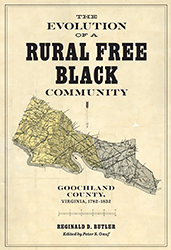 Reginald Butler, the second director of UVA's Carter G. Woodson Institute, wrote an influential and much-cited but never published dissertation at Johns Hopkins University that focused on community formation among the free Black population of Virginia. His innovative and meticulous research in county and state archives enabled him to reconstruct the ties that bound free Black Virginians to each other and their enslaved neighbors, as well as to white employers and officials.
Butler showed that community formation emerged in response to an oppressive, often violent regime of racial domination, yet it also depended on the critical role free Black people played in the local economy and their ability to sustain reciprocally beneficial working relations with their white neighbors. By reconstructing the lived experience of free Black families and the community they created at the neighborhood level, Butler's revelatory study offers still fresh perspectives on race and slavery in the formative decades of Virginian and American history. Now this seminal work finally sees the light of day, accompanied by several framing essays that properly situate Butler's foundational scholarship on free Black Americans in this still-burgeoning field.
[Return to table of contents]
New Book
Mahommah Gardo Baquaqua:
An Enslaved Muslim of the Black Atlantic
By Paul E. Lovejoy and Nielson Bezerra
University of North Carolina Press
302 pp., ISBN: 978-1469682457, 2025.
Description from the Publisher:
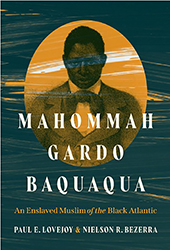 A literate Muslim born between 1820 and 1830 in present-day Benin, Mahommah Gardo Baquaqua was enslaved in West Africa and forcibly moved to Brazil in 1845. During a trip to New York City in 1847, he escaped from his master and fled to Haiti, where he converted to Christianity. When he eventually returned to the United States, he enrolled in New York Central College. Baquaqua published his autobiography -- the only known narrative by a former Brazilian slave -- in 1854 and traveled to England with the intention of returning to Africa. He apparently achieved this goal by the early 1860s, when his paper trail disappears.
Lovejoy and Bezerra's analysis of this remarkable autobiography illuminates what Baquaqua's home in Africa was like and examines African slavery in mid-nineteenth-century Brazil. It also offers an Atlantic perspective on resistance to slavery in the Americas in the era of the Fugitive Slave Law of 1850.
[Return to table of contents]
New Book
Mutiny on the Black Prince: Slavery, Piracy, and the
Limits of Liberty in the Revolutionary Atlantic World
By James H. Sweet
Oxford University Press
264 pp., ISBN: 978-0197692721, 2025.
Description from the Publisher:
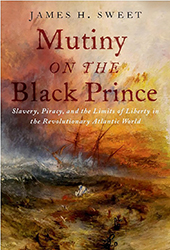 The dramatic story of a mutiny aboard an eighteenth-century British ship and how its owners effectively rallied the power of the British Crown to protect their investment and expand their wealth and political power across multiple generations.
In 1768, the British slave ship Black Prince, departed the port of Bristol, bound for West Africa. It never arrived. Before reaching Old Calabar, the crew mutinied, murdering the captain and his officers. The mutineers renamed the ship Liberty, elected new officers, and set out for Brazil. By the time the ship arrived there, the crew had disintegrated into a violent mob and fired into the port city. After the Black Prince wrecked off the coast of Hispaniola, the rebels fled to outposts around the Atlantic world. An eight-year manhunt ensued.
This book follows the crew's turn to piracy and the merchant-owners' response to the uprising. At the very moment that the American Revolution unfolded in North America, the Black Prince's owners conducted a "shadow" revolution, mobilizing the power of the British Crown to seek justice and restitution on their behalf. These private merchants used state surveillance, policing, extradition, capital punishment, international diplomacy, and even warfare in order to protect their wealth. During an era of professed liberty and freedom, the privatization of state power was already emerging, replacing monarchies with corporate oligarchies, presaging a new kind of political power in the Atlantic world. The eighteenth-century Bristol slave merchants and subsequent generations of their families accrued great fortunes from the trade and invested it in early British banks, railroads, insurance companies, industrial manufacturing, and even the Anglican Church.
Mutiny on the Black Prince narrates the dramatic story of the events onboard and the merchant owners' efforts to capture the rebels from around the Atlantic world, as well as the way that British slavery shaped the industrializing Atlantic economy and the evolution of the modern corporate state.
[Return to table of contents]
New Book
Africulture: How the Principles, Practices, Plants,
and People of African Descent Have Shaped American Agriculture
By Michael Carter Jr.
Chelsea Green Books
336 pp., ISBN: 978-1645023012, 2026.
Description from the Publisher:
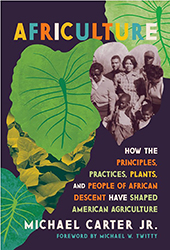 In Africulture, fifth-generation family farmer Michael Carter, Jr. has blended an eclectic brew of history, culture, African-centered perspectives, and African American farm realities. Throughout, he includes inspiring stories of innovators as well as sobering facts tracking the severe decline in the number of Black farmers in the United States over the last century. Descriptions of tropical crops that Carter grows, from jute to Nigerian spinach, enliven the text, as do anecdotes from his compelling family history and profiles of contemporary Black farmers and activists. Drawing on the lifecycle of a plant as a metaphor for both individual growth and the larger story of African American farming, Carter evokes the relationship between soil health (metaphorically, society and community) and plant health (i.e., the ability of Black farmers and families to thrive).
Africulture also includes Carter's heartfelt reflections on the cycles of progress and backsliding -- what he calls "blacklash" -- that are an inescapable part of the history of Black people in the United States, in agriculture and beyond. In the present moment, when the civil rights gains and progress toward economic parity for Black Americans of the past fifty years may be slipping away, Carter offers the possibility of a better future through several foundational principles of Africulture.
Destined to surprise, challenge, and enrich, Africulture lays bare the undeniable revelation that without African expertise and innovation, American agriculture -- and America itself -- would not exist.
[Return to table of contents]
New Book
Sweet Home Feliciana: Family, Slavery, and the Hauntings of History
By Rashauna Johnson
Cambridge University Press
368 pp., ISBN: 978-1009668323, 2026.
Description from the Publisher:
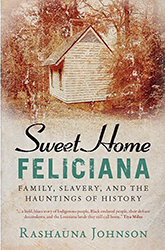 In this tapestry of intersecting stories, including those of her own family, Rashauna Johnson charts the global transformation of a rural region in Louisiana from European colonialism to Jim Crow. From her ancestor Virgil to her cousin Veronica and her hand-sewn Mardi Gras memorial suit more than a century later, this history is one of triumphs and trauma, illustrating the ways people of African descent have created sites of endurance, belonging, and resistance. Johnson uses her grandmother's birthplace in East Feliciana as a prism to illuminate foundational, if fraught, aspects of US history including colonialism, slavery, war, citizenship, and unfinished freedom. The result is a portrait of the world in a family, a family in a region, and a region in the world that insists on the bristling and complicated relationships of people to place and creates a new understanding of what it means to be American.
[Return to table of contents]
New Book
Freedom in the Age of Slavery:
A History of Free People of Color in Virginia
By Warren Eugene Milteer Jr.
University of Virginia Press
282 pp., ISBN: 978-0813954790, 2026.
Description from the Publisher:
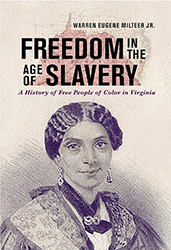 Virginia was the state with the most enslaved people prior to the Civil War. It was also at one time the state with the most resident free people of color -- free from the legal disabilities specifically associated with enslavement but still denied many basic civil rights. Written by an award-winning expert on free people of color in the American South, Freedom in the Age of Slavery is the first modern comprehensive history of free Virginians of color from the colonial period through Reconstruction.
Milteer recounts in granular detail the discriminatory policies and resulting hardships that free Virginians of color faced, while also documenting the openings they created for themselves and the successes they enjoyed against overwhelming odds. Throughout, he highlights the commonwealth’s significance as the laboratory for legal discrimination throughout the nation, while never losing sight of the ways free people of color seized their opportunities wherever possible and built meaningful lives in the face of massive white resistance.
[Return to table of contents]
New Book
Daily Life along the Underground Railroad
By Cassandra Newby-Alexander
Bloomsbury Academic
200 pp., ISBN: 978-1440881404, 2026.
Description from the Publisher:
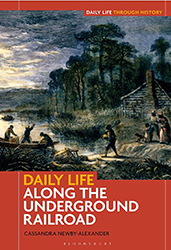 Delving into the lives and stories of everyday men and women either escaping slavery or helping others to escape, this book shows the day-to-day realities of life along the Underground Railroad. This story explores the range of perspectives by examining the various geographic areas, means of escape, places of refuge, and the people who helped them, giving nuance and understanding to this period of American history. From physical abuse to the fear of recapture to the daring efforts to rescue others, chapters detail the challenges and hardships brave freedom seekers faced in their efforts to escape the bonds of slavery.
The book further addresses head on common misconceptions and important points of view that history has failed to represent. The book's heart comes from the real stories of real freedom seekers and Underground Railroad agents interwoven throughout the book. Additional resources such as a timeline and a glossary further complement the work, giving students quick access to major events and themes about the Underground Railroad and its contextualizing history.
[Return to table of contents]
New Book
Resistance to Slavery in Africa: Past and Present
Edited by Marie Rodet, Lotte Pelckmans, Wayne Dooling, and Esteban Salas
Routledge
300 pp., ISBN: 978-1041297857, 2026.
Description from the Publisher:
 Resistance to Slavery in Africa: Past and Present offers a sweeping, accessible overview of how African individuals and communities have challenged slavery across centuries. Bringing together insights from Anglophone, Francophone, Lusophone, Arabic and Ottoman scholarship, this volume presents a truly pan-African perspective on resistance movements from the precolonial era to the digital age.
The collection traces resistance across diverse geographical regions -- from West and Central Africa to the Indian Ocean and Sahara -- demonstrating how people confronted external slave trades, local systems of bondage and enduring inequalities that survived abolition. Foregrounding voices too often hidden in the archives, this book explores creative strategies enslaved people used to claim rights, negotiate freedoms and reshape their social worlds through customary, Islamic and colonial courts. It highlights women's pivotal roles in resistance movements, from fleeing sexual violence to forging new kinship networks. Methodologically rich, the collection draws on oral traditions, microhistory, social history and digital humanities to illuminate overlooked experiences. By linking historical struggles to contemporary grassroots activism -- including digital mobilisation against modern forms of slavery -- it reveals resistance as an ongoing, evolving process that continues to shape African societies today.
Essential reading for scholars of African studies, slavery studies and social history, this volume reframes African resistance as locally rooted, historically continuous and globally significant. This book was originally published as a special issue of Slavery & Abolition.
[Return to table of contents]
New Book
Settling Debt: Antislavery and Colonial Crisis
By Cameron Seglias
Cornell University Press
270 pp., ISBN: 978-1501786518, 2026.
Description from the Publisher:
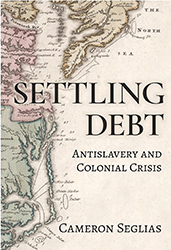 Settling Debt overturns the familiar tale of early antislavery as a pure moral triumph by revealing its uneasy ties to colonial ambition and economic anxiety. Cameron Seglias shows how, from the late seventeenth century through the American Revolution, settlers and religious writers condemned slavery as a threat to their own prosperity and salvation. Debt, understood both as money owed and moral obligation, anchored their vision of freedom and shaped how they justified seizing Indigenous lands while denouncing racial bondage.
Drawing from neglected books, pamphlets, poems, and dramatic protests, like the radical acts of Benjamin Lay, Seglias weaves literary close readings with sharp historical insights to expose how freedom and dispossession were two sides of the same coin. At once readable and provocative, Settling Debt compels us to see how the language of moral debt masked the building of a colonial order rooted in inequality. In revisiting this past, Seglias offers a timely reminder: The debts of America's founding have yet to be settled.
[Return to table of contents]
Book Review
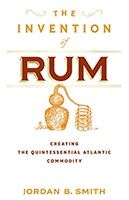
Jordan B. Smith. The Invention of Rum: Creating the Quintessential Atlantic Commodity. University of Pennsylvania Press, 2025. 308 pp. (cloth), ISBN 978-1-5128-2818-4.
H-Net Book Review, published by H-Early-America, https://networks.h-net.org/h-early-america (June, 2026).
Reviewed for H-Early-America by Elizabeth Schmidt (University of California, Santa Barbara).
Rum holds a central place in many narratives of the Atlantic World, standing center stage in stories of pirates, navies, slave rebellions, and provisioning. Rum shows up in histories of nearly every country in the Atlantic World: It was given to enslaved laborers on plantations across the American South and Caribbean, it became a central part of the British navy's provisions throughout the many global wars of the long eighteenth century, and Robert Louis Stevenson's pirate shanty "yo ho ho and a bottle of rum" captured the imagination of many readers and consumers of pirate media from the nineteenth century onward. However, despite the importance of rum to the history of the Atlantic World, relatively few histories have focused on the commodity.[1] Into the paucity of rum history books comes Jordan B. Smith's The Invention of Rum: Creating the Quintessential Atlantic Commodity, a more complete and encompassing book than any book on rum that has come before. Impressively, Smith's archival research stretches from North to South America, the Caribbean, the west coast of Africa, and the British Isles. Although rum was, for all intents and purposes, invented in Barbados and its history is generally centered within the British Empire, the narrative that Smith tells moves back and forth across the Atlantic Ocean, with players in locales like Boston, Glasgow, Jamaica, Saint Domingue, and the Gold Coast. Smith's analysis marries the histories of globalization, mercantilism, and capitalism with the cultural histories of value and the social meaning of commodities.
The book is written in three parts, each around a different theme: "Creation," "Extraction," and "Connection and Conflict." Chronologically, Smith's book covers what is often described as the long eighteenth century, beginning the narrative of rum's invention in fermented sugar wines, Europeans' first attempts to make something of the waste from sugar production in the Caribbean and South America. Distilled alcohols from sugar and waste products from sugar mills can be dated as early as 1611 in Brazil, yet it was in Barbados that rum had its true origins sometime in the midseventeenth century. By the end of the eighteenth century, rum had a consistent definition among producers and consumers, both in the way it was made and in its entanglement with plantation slavery, and this is where Smith effectively ends his analysis. The book, however, ends with an epilogue that brings the story to the present day, considering how the legacies of Atlantic slavery continue to be intertwined with rum production and consumption.
The first part of Smith's book ("Creation") considers the "invention" of rum as a product, tracing its origins in bodies of knowledge that were already in the Caribbean from the Indigenous people who lived there and information that came to the region with European colonizers and enslaved Africans. Truly an Atlantic product, rum was "invented" by a "multiracial cast of producers and innovators living in Barbados," as "makers, traders, and drinkers" exchanged information about production and consumption that led to a distilled product that would contribute to the shaping of the Atlantic World (p. 12). Not only did a bevy of actors contribute to the invention of the distilled product that came to be known as rum, but Africans, Indigenous Americans, and, to a lesser extent, Europeans also came together to determine rum's social value in particular contexts. For example, where previous histories of North America have seen rum as a tool of European colonization, used to placate local Indigenous leaders and make them dependent on Europeans for a steady supply of the drink, Smith finds ample evidence to show that Native peoples in the Americas saw rum simultaneously as a danger and an opportunity for "economic vitality, self-determination, and sovereignty" (p. 57).
Part 2, "Extraction," considers the "highly extractive systems that centered profits in the hands of elite Englishmen and colonials," tracing the processes of creation, distribution, and consumption that relied on extracted labor from enslaved Africans and affected local environments to great detriment (p. 13). Finally, part 3, "Connection and Conflict," details the challenges to those extractive systems, including government officials attempting to regulate the production, sale, and distribution of the new product; anti-slavery campaigns that focused their attention on ending the transatlantic slave trade and the practice of slavery in European empires; and even resistance from the enslaved themselves in the form of physical resistance against distilleries.
Beyond following the paper trail of rum innovation and trade, Smith also touches on material culture, geography, and environmental studies. Two chapters, in particular, stand out as shining examples of interdisciplinary research. First, in chapter 3, "Circulating Ideas in a World of Rum," Smith traces the development of distillation technology as producers and traders attempted to create a standardized version of rum for easier sale. From stills, to barrels, to "philosophical beads" designed to test the proof of the alcohol, "the steady transmission of information simultaneously served the goals of empire because standardization functioned as a form of control that could, at times, yoke distant sites of production together" (p. 75). Sketches of still orders, patents for still designs and hydrometers, and "philosophical beads" found in museum collections contribute to Smith's argument in this chapter that producers could "read the distilling equipment itself" to determine the best methods for producing consistent, quality rum (p. 89).
However, it is chapter 5, "Rum's Environmental Costs," that is the book's star. In this chapter, Smith argues that the production of rum was a system "where nonelite, and especially enslaved, producers bore the most extreme costs of deforestation, disaster, and disease that accompanied their rum yields" (p. 128). Deforestation was caused by the need for arable land, fuel to fire stills, and
timber for the puncheons and hogsheads that carried rum and molasses out of the colonies, and it was almost entirely enslaved labor that was exploited to meet these needs. Deforestation also led to short-term environmental costs, such as drought, more intense storms, and massive flooding, all of which had a larger impact on the enslaved populations who were generally housed in structures that were shoddily built and situated in low-lying areas. While Smith focuses primarily on the environmental impacts in the Caribbean, especially Barbados and Jamaica, rum production in North American cities also highlights "how environmental disasters shaped by human decisions were experienced differently based on legal status, race, and financial means" (p. 141). For example, yellow fever outbreaks in Philadelphia in the 1790s led to those of financial means leaving the city and hiring people of African descent to continue their economic activities, especially continuing to run the rum distilleries, as well as care for the sick, many of whom were distillery employees living in close quarters due to their low economic status. Ultimately, Smith argues in this chapter that, while rum production had profound impacts on local environments, elite mobility meant that those impacts were felt largely by people without the economic means to move elsewhere. Furthermore, plantation owners and government officials knew the impact that plantation economies and rum production had on Caribbean environments and city populations. However, since those owners and officials had the means to physically leave the impacted areas, they chose not to consider any kind of broader change that would have lessened the effects.
The book is a welcome addition to the fields of Atlantic history, history of commodities, food history, and the history of slavery, and is a must-read for anyone working in fields even tangentially related to these. Yet while the archival evidence is rich, it is sometimes a little too dense to make the book appropriate for an undergraduate classroom or non-scholarly readers.
Notes
[1]. John J. McCusker, Rum and the American Revolution: The Rum Trade and the Balance of Payments of the Thirteen Continental Colonies (Garland, 1989); Peter C. Mancall, Deadly Medicine: Indians and Alcohol in Early America (Cornell University Press, 1995); José C. Curto, Enslaving Spirits: The Portuguese-Brazilian Alcohol Trade at Luanda and Its Hinterland, c. 1550-1830 (Brill, 2004); and Frederick H. Smith, Caribbean Rum: A Social and Cultural History (University Press of Florida, 2005).
[Citation: Elizabeth Schmidt. Review of Smith, Jordan B, The Invention of Rum: Creating the Quintessential Atlantic Commodity. H-Early-America, H-Net Reviews. June, 2026. This work is licensed under a Creative Commons Attribution-Noncommercial-No Derivative Works 3.0 United States License. H-Net permits the redistribution and reprinting of this work for nonprofit, educational purposes.]
[Return to table of contents]

©2026 African Diaspora Archaeology Network
Copyright and all rights reserved by
individual authors for each article.
Please send comments, suggestions,
or questions to the editor
Last updated: June 30, 2026
Text only menuSearch
|