
December 2025 NewsletterISSN: 1933-8651
In this issue we present the following articles, news, announcements, and reviews:
|
Article
News and Announcements
Conference
New Exhibit and Books
Book Review
|
Was Abner Landrum a Secret Abolitionist in South Carolina?
By Carl Steen

The innovation and development of alkaline-glazed stoneware pottery in America occurred in the Edgefield District of South Carolina in the early 1800s. These potteries, including those established by Dr. Abner Landrum and his family, employed enslaved and free African-American laborers in the 19th century. Landrum was born in what is now Edgefield in 1784 and moved to the state capital, Columbia, in 1831. He died in 1857 and was buried in a family plot near his home in Columbia, which is still standing and occupied. He is best known for introducing alkaline glazed stoneware manufacture to the South, but he also trained as a physician, studied chemistry and mathematics, and owned a print shop. Landrum developed a method of grafting pecan branches to black walnut trees that resulted in the modern paper shell pecan -- a revolutionary development in that field. He founded a town of artisans and craftsmen on the outskirts of Edgefield that became known as Landrumsville, and later, Pottersville.
Was Abner Landrum also, as John Smedley (1883: 152) said, "instrumental in many instances in nullifying to some extent the harshness and cruelty with which the slaves were generally treated in his section of the South"? Perhaps by example, and perhaps by word, but in South Carolina society at the time to even mildly favor abolition would have been, at best, frowned upon, and more likely vociferously condemned. Landrum was caned in his office by the Governor's brother-in-law after he reported in the Hive newspaper that the Governor owned stock in Northern textile mills. Both Abner and his son Palissey had printing contracts with the state government, so it seems likely they kept their opinions to themselves. So, the social situation and the known temperament of the man, suggest it, but was Abner Landrum a discrete Abolitionist? An active member of the Underground Railroad? We may never know for sure.
[Read or download this full article in Adobe format >>>].
[Return to table of contents]
2025 Frederick Douglass Book Prize Winner
Gilder Lehrman Center, Dec 16, 2025
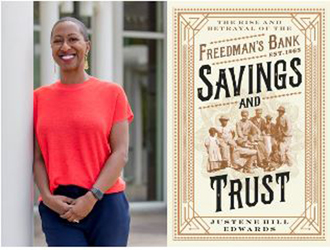
New Haven, Conn. The Yale MacMillan Center's Gilder Lehrman Center for the Study of Slavery, Resistance, and Abolition announced the winner of the twenty-seventh annual Frederick Douglass Book Prize, one of the most acclaimed awards for global studies of slavery, opposition to it, and the experiences and resistance of enslaved people.
The 2025 Prize will be awarded to Justene Hill Edwards for Savings and Trust: The Rise and Betrayal of the Freedman's Bank (W. W. Norton and Company). Hill Edwards is an Associate Professor of History at the University of Virginia.
James G. Basker, President of the Gilder Lehrman Institute of American History, describes Savings and Trust as one of the most important books ever to win the Frederick Douglass Book Prize.
This annual prize, jointly sponsored by the Gilder Lehrman Institute of American History in New York City and the Gilder Lehrman Center for the Study of Slavery, Resistance, and Abolition at Yale University, recognizes the best book written in English on the topics of slavery, resistance, or abolition copyrighted in the preceding year. The $25,000 prize will be presented to Hill Edwards at an award ceremony sponsored by the Gilder Lehrman Institute at Trinity Church in New York City on February 12, 2026.
Juanita DeBarros, chair of the jury for this year's award, praises Savings and Trust for its clear explanation of the complicated world of nineteenth-century banking and finance and the political and economic context within which the Freedman's Bank was established and collapsed. The book, DeBarros observes, "moves between the stories of the individual African American women and men who used the bank, well-known figures such as Frederick Douglass, and the white trustees whose actions led to its collapse." Hill Edwards demonstrates that "the bank was a 'source of dignity' for the Black people who used it and highlights the experiences of Black women who used the bank to achieve their own economic and social goals." DeBarros is a Professor of History and Director of the McMaster University Centre for Human Rights and Restorative Justice.
At the award ceremony, the three other finalists for the prize also will be recognized. These are: Keidrick Roy for American Dark Age: Racial Feudalism and the Rise of Black Liberalism (Princeton University Press); Makhroufi Ousmane Traoré for Slavery, Resistance, and Identity in Early Modern West Africa: The Ethnic-State of Gajaaga (Cambridge University Press); and Gloria McCahon Whiting for Belonging: An Intimate History of Slavery and Family in Early New England (University of Pennsylvania Press).
[Read the full article online at Gilder Lehrman Center news >>>].
[Return to table of contents]
Statue of Black Teen Who Fought Segregation
Replaces Robert E. Lee at U.S. Capitol
By Gregory S. Schneider and Laura Meckler
Washington Post, Dec. 17, 2025
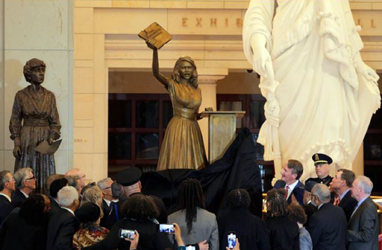
Barbara Rose Johns was only 16 when she led a walkout in 1951 to protest horrendous conditions at her segregated high school for Black students in rural Farmville, Virginia.
The symbolism was hard to miss: In the halls of the U.S. Capitol on Tuesday, the statue of a Black teenager who fought against segregation replaced a Confederate general who fought to preserve slavery.
Barbara Rose Johns was only 16 when she led a walkout in 1951 to protest horrendous conditions at her segregated high school for Black students in rural Farmville, Virginia. Students complained to the NAACP, and their case went all the way to the Supreme Court, part of the set of cases known as Brown v. Board of Education that struck down school segregation.
Tuesday afternoon, a statue of Johns was unveiled at the Capitol to replace one of Confederate Gen. Robert E. Lee that had stood for more than a century. Every state is represented by two statues in the halls of the Capitol building, and Johns joins George Washington to represent Virginia.
“The Commonwealth of Virginia will now be represented by an actual patriot who embodies the principle of liberty and justice for all, and not a traitor who took up arms against the United States,” said House Minority Leader Hakeem Jeffries (D-New York).
A crowd of hundreds gathered in Emancipation Hall, named for the enslaved workers who helped build the Capitol, including about 200 members of Johns’s family — one of the largest gatherings ever assembled there for a statue unveiling, said House Speaker Mike Johnson (R-Louisiana).
Cheers rang out when the statue was unveiled. There was Johns, who died in 1991, frozen in time — her right arm lifting a book to the sky as she stands beside a podium to rally her peers. The pedestal of the statue quotes Scripture: “... and a little child will lead them.”
In a few days, the statue will move to the Crypt, where Lee stood until he was removed in the middle of the night almost exactly five years ago.
For the Johns family and the Farmville community, the fact that her name is spoken alongside Washington’s was stunning — and also fitting.
[Read the full (gift) article online at Washington Post >>>].
[Return to table of contents]
Relatives, Community Breathe Life into
Those Buried at Pleasant Point Cemetery
By Kyla Woodard
Clay Today News, Dec. 25, 2025
Formerly Abandoned Black Cemetery in Florida Restored, Now Open
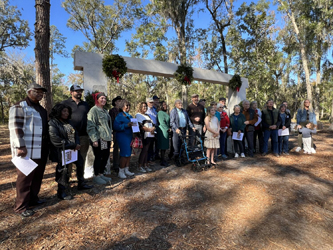
Green Cove Springs - Former Green Cove Springs Mayor Connie Butler had tears in her eyes as she roamed around Pleasant Point Cemetery.
There was a connection that she couldn't shake. A joy that she couldn't help but feel.
After years of abandonment, the place where her great-great-great-grandmother, Maggie Andrews Lewis, was laid to rest had finally been restored. She could see very clearly where her roots came from.
"It's rewarding. It's like a hidden treasure that has been found. It's a piece of you. You feel proud," she said.
The air was chilly, but the spirits were high as community members gathered on Saturday, Dec. 20, to honor Lewis, along with others buried in the historic Black cemetery. More than a year ago, amateur archaeologist and former U.S. History teacher Steve Griffith began his quest to restore the abandoned space.
Pleasant Point Cemetery, located on County Road 209, is a burial ground for some of the county's most significant Black figures. U.S. Navy Veteran George Elias Forrester, along with some of his family members, is buried at Pleasant Point. He served with the Union in the Civil War. The son of Cyrus and Dorcas Forrester, his family was the first free Black family in the county.
Elizabeth Lewis-Jenkins, the wife of Thomas H. Jenkins, is also buried there. Thomas was one of the trustees and founders of Mount Zion A.M.E. Church in Green Cove Springs.
Not too far from them also lies Pizel and Mary Ambrose Robinson, the great-grandparents of R&B singer Patti LaBelle and local educator Thomas Hogans. Since beginning the restoration process, a total of 41 individuals have been identified.
"I started this, but then it just took on a life of its own," Griffith said.
During the intimate ceremony, Butler read off the names, while the crowd gave a moment of silence.
[Read the full article online at Clay Today News >>>].
[Return to table of contents]
The Disgraceful History of Erasing Black Cemeteries in the United States
Chip Colwell
The Conversation, Oct. 22, 2025
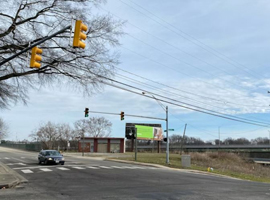
The burying ground looks like an abandoned lot.
Holding the remains of upward of 22,000 enslaved and free people of color, the Shockoe Hill African Burying Ground in Richmond, Virginia, established in 1816, sits amid highways and surface roads. Above the expanse of unmarked graves loom a deserted auto shop, a power substation, a massive billboard. The bare ground of the cemetery is strewn with weeds.
In contrast, across the way sits Shockoe Hill Cemetery. Established in 1822, it remains a peaceful cemetery with grass, large trees and bright marble headstones. This cemetery was created for white Christians.
I am an archaeologist who studies how the past shapes public life. Several years ago, I wrote with colleagues about the legacies of stolen human remains of African Americans in museums. During this time, I learned more about how African Americans often had to bury their dead in unsanctioned spaces that received few protections.
As I dug into this history, what struck me the most was that the different treatment of African Americans in death paralleled their long mistreatment in life. Places like Shockoe have not been accidentally forgotten.
Although its purpose has endured and graves survive, Shockoe Hill African Burying Ground, the largest burial ground for enslaved and free people of color in the United States, has witnessed deliberate acts of violence. As the historian Ryan K. Smith writes, Shockoe "was not, as some would say, abandoned -- it was actively destroyed."
This issue of protecting Black cemeteries first came to popular attention in 1991, when the African Burial Ground in downtown New York City was rediscovered and nearly obliterated by a construction project. It was preserved only through the valiant efforts of African American leaders and scientists.
In recent years, similar threats to Black cemeteries and questions about preservation have been reported at the Whitney Plantation in Louisiana, the Morningstar Tabernacle No. 88 in Maryland and a rediscovered graveyard in Florida, among many others.
Like these other cemeteries, the Shockoe Hill African Burying Ground has long faced constant perils, from grave robbing to construction projects.
[Read the full article online at The Conversation >>>].
[Return to table of contents]
Open Access Articles from the
Journal of African Diaspora Archaeology and Heritage
The Journal of African Diaspora Archaeology and Heritage (Taylor & Francis Press) includes open access articles. You can find these on the journal website (link). Examples of articles currently available with free access include:
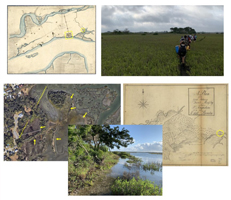
"Waiting on the Tide: Climate Change, Cultural Heritage, and Legacies of Anti-Blackness at Fort Mose," by Mary Elizabeth "Liz" Ibarrola. Abstract: Colonial Florida was a legal and jurisdictional borderland, within which many Afro-diasporic peoples negotiated to best protect their freedoms. However, they also found that emergent ideas about race were shaping the negotiation, circumscribing their options, and working to define a marginalized position for them within Florida society. The site of Fort Mose exemplifies this history and the challenges confronted by Afro-diasporic people within it. Furthermore, the threats to heritage preservation currently faced at the site highlight the ways which anti-Black ideology and action have had a persistent effect on the site, from its inception through the present day. Fort Mose was vulnerable by design. While it is today recognized for its symbolic role in the colonial era, as a site of Black heritage it is threatened not only by rising sea levels and increased storm activity, but also a historical legacy of marginalization. Keywords: Florida, climate change, environmental racism, African diaspora, cultural heritage (article link).
"We Remember Through the Spirit: Yoruba Intangible Heritage, Diasporic Belonging, and the Cultural Work of Aladura Churches in the UK," by Anna Catalani. Abstract: This paper explores how Aladura Churches sustain, adapt, and mobilize Yoruba intangible heritage – understood as oral traditions, rituals, music, and dance – to foster cultural identity and decolonial belonging in diasporic settings. Emerging in twentieth-century Nigeria and now established in the UK, Aladura Churches use heritage practices both as faith expressions and as tools for identity-building, continuity, and resilience. The article has two aims: first, to examine how these traditions are reinterpreted transnationally, reshaped to meet the spiritual and social needs of diasporic communities; and second, to assess how Aladura Churches' digital platforms function as spaces of cultural resistance, challenging marginalization and asserting diasporic identities. The paper argues that by integrating Yoruba heritage into sacred and civic life, Aladura Churches engage with global discourses on decolonization, multicultural citizenship, and heritage preservation. By doing so, they offer a decolonial model of heritage that reclaims memory, redefines legitimacy, and broadens cultural recognition in contemporary Britain. Keywords: Yoruba intangible heritage, Aladura churches, diasporic cultural resilience, decolonial heritage discourse, UNESCO intangible heritage convention, diaspora studies, religious practices, community heritage preservation (article link).
"Introducing African Mobilities and Heritage in the Indian Ocean World," by Shihan de Silva Jayasuriya. Abstract: As the United Nations International Decade for People of African Descent was approaching its end (2015–2024), the contributing authors were invited to write articles in order to complement its pillars: Recognition, Justice and Development. Whilst the articles were in progress, the UN adopted a second decade recognizing work that needed to be completed in order to address the full human rights of people of African descent. Recognition of People of African descent in the Indian Ocean World emanating from involuntary migration is a crucial part of bringing about justice. Building our episteme of African migrations continues as we enter the Second International Decade for People of African Descent (2025–2034). Keywords: African Heritage, Indian Ocean region, slavery, marronage, Sri Lanka, military, labour, abolition (article link).

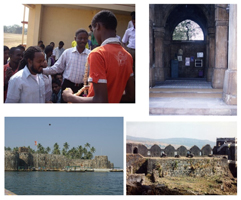
"Island Fort Janjira: Living Memories and Heritage," by Beheroze Shroff and Sonal Mehta. Abstract: An independent princely state (1621-1948), Janjira Fort and extended territories on the West Coast of India were governed by African Muslim rulers called Nawabs. This paper explores Janjira as a centre of trade and heritage tourism. We discuss protecting the Fort's cultural heritage and legacy of cosmopolitan communities who lived and worked in Janjira for generations. Our research is based on oral narratives and vivid memories of Indians of diverse backgrounds who served the Nawabs. History lives in their reflections of Janjira, as a unique place of the cultural formation of a microworld, arising from global processes of trade and commerce which defined its diverse racial and ethnic composition. We also offer the perspectives of descendants of the last Nawab of Janjira State. We conclude that Janjira Fort and the tombs of the Nawabs are heritage structures, an integral part of African History in India and need urgent attention for their preservation. Keywords: Sidis, Janjira Fort, living memories, heritage and tourism, cosmopolitanism, Indian Ocean (article link).
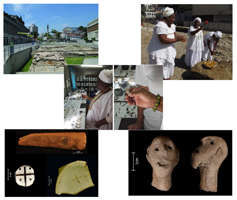
"Valongo, the Place of the Ancestors: Spiritual Practices among Enslaved Africans in Nineteenth-century Rio de Janeiro," by Tania Andrade Lima. Abstract: In 2017, UNESCO added Valongo Wharf to its list of World Heritage Sites. Located in Rio de Janeiro's Port Zone, the wharf is a place of memory associated with the transatlantic slave trade, which has been compared to other sites that have witnessed intense human suffering, such as Auschwitz, Hiroshima and Gorée Island, among others. This chapter explores the spiritual practices of the "wretched of the Earth," as Frantz Fanon named those Africans dehumanized by European colonialism. More specifically, it focuses on the Africans shipped to Valongo to be sold as slaves in Rio de Janeiro and who left vestiges of their spiritual beliefs, recovered through archaeological research. Here, these remains are analyzed from a decolonial perspective, born from the reflections of critical Latin American thinkers who reject the diverse forms of domination and oppression inflicted by Northern hemisphere powers on subaltern populations of the global South. Keywords: Valongo Wharf, urban slavery, spiritual beliefs, decolonial thought, diasporic communities, historical archaeology, archaeology of the African diaspora, descendant communities (article link).
[Return to table of contents]
Call for Proposals:
Restorative Justice in Heritage Studies & Archaeology

The Restorative Justice in Heritage Studies and Archaeology book series, published by Routledge Press and edited by Richard Paul Benjamin (University of Liverpool), Christopher C. Fennell (University of Illinois), and Nedra K. Lee (University of Massachusetts), seeks proposals for single-author, multi-author, or edited books. Restorative justice in heritage and archaeology embraces initiatives for reconciliation of past societal transgressions using processes that are multivocal, dialogic, historically informed, community based, negotiated, and transformative. This series will present works that promote the active and often unconventional ways that archaeologists, historians, and heritage scholars are contributing to a process of remaking. Our authors work to define and illuminate the best practices for restorative justice in these fields and to identify how practitioners and their collaborators are working to redress, reconcile, and remake contemporary society.
Such restorative justice efforts typically focus on multiple perspectives and modes of reconciliation, rather than a narrow vision of retribution and punishment. Reparation initiatives are often multivocal, layered, multiplex, and visionary in this way. Restorative justice initiatives often occur through such a collaborative process which entails relationship building and story-telling, accountability and truth-telling, and reparative engagement.
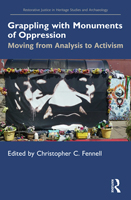
Our first two volumes in the series are Grappling with Monuments of Oppression: Moving from Analysis to Activism (link) and Combating Oppression with New Commemorations (link). Other volumes under contract and preparation address "archaeologies with heart" and monuments to women world-wide.
Interested in proposing a book for this series? Contact one of us: Nedra.Lee@umb.edu, Richard.Benjamin@liverpool.ac.uk, or cfennell@illinois.edu.
General guidelines for authors are available from Routledge Press.
Follow this initiative through our website, and on Facebook.
[Return to table of contents]
Society for Historical Archaeology
2026 Conference on Historical and Underwater Archaeology
January 7-10, 2026, Detroit, Michigan

"The SHA 2026 Conference Committee invites you to the 59th Conference on Historical and Underwater Archaeology in Detroit, Michigan, USA, from 7 to 10 January 2026. The 2026 SHA conference will be held at the Detroit Marriott at the Renaissance Center, located on the riverfront in downtown Detroit, just across the Detroit River from Windsor, Canada. The conference hotel's prime location provides direct access to public transportation and world-class restaurants, museums, architecture, cultural institutions, and archaeology that speak to the city's vibrant history of innovation, industry, and creativity."
Presentations and discussions related to African diaspora topics include:
Camp Nelson, Civil War Depot and Emancipation Center for Kentucky;
Unearthing Craft and Customs Embedded in Clay: The Archaeology of Locally Made Coarse Earthenwares;
Hearts in Transit: Emotional Journeys in Historical Archaeology;
Archaeologies of Black and Indigenous Sovereignty;
Unburying Black Towns: Archaeologies of Black Freedom, Erasure, and Mobility Across North America;
Archaeology in the Public Realm: A Decade of Work at the Harlem African Burial Ground;
Storied Landscapes: Co-Producing Meaningful Knowledge about Pasts, Presents, and Futures;
The Archaeology of the Black American Experience.
View the full conference program online.
[Return to table of contents]
New Exhibit
Unbound: Art, Blackness and the Universe
Museum of the African Diaspora, San Francisco, CA
Curated by Key Jo Lee
October 1, 2025 to August 16, 2026.
Description from the Museum:
 Unbound: Art, Blackness and the Universe is a groundbreaking exhibition that explores the intersections of Blackness and the cosmos. Curated by Key Jo Lee, MoAD's Chief of Curatorial Affairs and Public Programs, the show invites visitors to reimagine Blackness not as fixed or earthbound, but as infinite—expansive, unknowable, and cosmically rich.
Inspired by Lee's essay, "Gesturing Toward Infinitude: Painting Blue/Black Cosmologies," the exhibition asks: What if we approached Blackness with the same wonder we bring to the universe? What if, like a black hole or distant star, Blackness could be a site of mystery, power, and transformation?
Featuring a global and intergenerational group of artists -- including Lorna Simpson, Rashaad Newsome, Gustavo Nazareno, Harmonia Rosales, Didier William, and many more -- the exhibition spans painting, sculpture, installation, and video. Works traverse the historical and the speculative, the scientific and the spiritual.
Three core themes guide the journey: Geo-Cartographic: Blackness mapped across earthly and celestial terrains; Religio-Mythic: Blackness as origin, cosmology, and creation story; Techno-Cyborgian: Blackness as posthuman -- shaped by technology, hybridity, and the ability to move fluidly between identities. The posthuman is not one fixed form, but an evolving state of becoming, capable of multiple perspectives.
More than an exhibition, Unbound is a philosophical inquiry and sensory experience. A rich array of public programs, an onsite learning lab, and the museum's first community-written labels ensure depth and accessibility for all visitors.
Ultimately, Unbound invites us to wonder: What else can Blackness be? When freed from institutional constraints and historical reductiveness, Blackness becomes luminous -- an expansive mode of being, a cosmology of creative potential. The show invites us not simply to observe, but to wonder. To stand at the edge of the known and look out -- into the dark, where unbound possibility lives.
[Return to table of contents]
New Book
Fort Mose: Colonial America's Black Fortress of Freedom
By Kathleen Deagan, Darcie MacMahon and Jane Landers
University Press of Florida
160 pp., 166 illustrations, ISBN: 9780813081007, 2d ed., 2025.
Description from the Publisher:
 The illustrated story of the history and groundbreaking discovery of an important historical site, fully updated on the 30th anniversary of its first publication.
More than 300 years ago, enslaved people of African descent risked their lives to escape from slavery on English plantations in South Carolina. Hearing that Spaniards in Florida promised religious sanctuary, they made their way south to St. Augustine, Florida. The Spanish established the fort and town of Gracia Real de Santa Teresa de Mose, the first legally sanctioned free Black community in what is now the United States. This book tells the story of Fort Mose and the people who lived there.
Fort Mose traces the roots of this eighteenth-century free Black town from Africa through Iberia and Hispanic America to the colonial southeastern United States. It also tells how archaeologists, historians, local residents, teachers, and politicians worked together in the late twentieth century to bring the rich but neglected history of free Black people in the Spanish colonies to the public. The site of Fort Mose is now a major point on the Florida Black Heritage Trail and has been designated a National Historic Landmark and a UNESCO Site of Memory. Research continues at the location to the present day.
This second edition is updated with new information uncovered about Fort Mose, its inhabitants, and its historical significance. It reflects recent developments in community involvement and preservation at the site. And as the first edition did, it challenges the idea that the American Black colonial experience was only that of slavery, offering a story of a courageous group of people of African descent who realized their vision of self-determination before the American Revolution.
[Return to table of contents]
New Book
The Yoruba Are on a Rock: Recaptured Africans and the Orisas of Grenada
By Shantel A. George
Cambridge University Press
346 pp., ISBN: 978-1009358965, 2025.
Description from the Publisher:
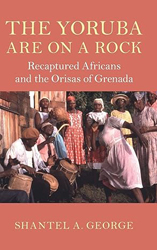 The Yoruba Are on a Rock focuses on the Africans who arrived in Grenada decades after the abolition of the British slave trade and how they radically shaped the religious and cultural landscape of the island. Rooted in extensive archival and ethnographic research, Shantel A. George carefully traces and unpacks the complex movements of people and ideas between various points in western Africa and the Eastern Caribbean to argue that Orisa worship in Grenada is not, as has been generally supposed, a residue of recaptive Yoruba peoples, but emerged from dynamic and multi-layered exchanges within and beyond Grenada. Further, the book shows how recaptives pursued freedom by drawing on shared African histories and experiences in the homeland and in Grenada, and recovers intriguing individual biographies of the recaptives, their descendants, and religious custodians. By historicising this island's little-known and fascinating tradition, the book advances our knowledge of African diaspora cultures and histories.
[Return to table of contents]
New Book
Honey Springs, Oklahoma: Historical Archaeology of a Civil War Battlefield
By William B. Lees
Texas A&M University Press
352 pp., with 40 illustrations, 15 maps, and 9 tables, ISBN-13 978-1-64843-293-4, 2025.
Description from the Publisher:
 Troops involved in the Battle at Honey Springs, Oklahoma included the U.S. First Kansas Colored Infantry, which was the first Black regiment engaged in battle (at Island Mound, Missouri). This regiment recruited free and self-emancipated African Americans, some of whom were refugees from the "Indian Territory" (now the state of Oklahoma). The majority of troops on both sides were Native Americans, with a lesser number of European American troops.
The sectional conflict between North and South was different in Indian Territory. There, the Civil War was only a veneer over the competition among the United States, the Confederacy, and sovereign Indian Nations known as the Five Civilized Tribes whose citizens, in turn, had multiple motives that drove divided loyalties. Historians have long recognized the Battle of Honey Springs on July 17, 1863, for its unusual makeup of Black, Indian, and white combatants and as the most significant battle of the Civil War in Indian Territory.
Honey Springs, Oklahoma: Historical Archaeology of a Civil War Battlefield is the first book to focus solely on this event. It is unique in that its discourse and conclusions flow from the convergence of three lines of evidence: written history (memory), scientific archaeological findings, and military terrain analysis of the landscape. This triangulation of sources offers a place for long overlooked perspectives and returns an otherwise missing voice to Native American and Black participants.
One of the synthesizing questions addressed by author William B. Lees is how to explain rebel loss. Given the participants' cultural diversity, the question has many answers; victory and defeat are, after all, in the eye of the beholder. Honey Springs, Oklahoma makes clear the location of skirmishing, the lopsided attack of Union troops on the right of the Confederate line, and precise locations of fighting during the rebel retreat. This analysis is the fulcrum in the re-envisioning of the agency of Native American participants. This groundbreaking study will provide new insights for students and scholars of historical archaeology, and military historians and general readers with an interest in the Civil War and its archaeological record will also benefit from Lees's research into this important but heretofore little-studied engagement.
[Return to table of contents]
New Book
Foundations of Black Epistemology: Knowledge Discourse in Africana Philosophy
By Adebayo Oluwayomi
Temple University Press
259 pp., ISBN: 978-1439925485, 2025.
Description from the Publisher:
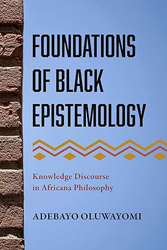 Foundations of Black Epistemology is Adebayo Oluwayomi's bold endeavor to delineate Black epistemology as a new sub-disciplinary focus in contemporary Africana or Black philosophy. He engages in a rigorous historical study of Black intellectual history to show how seminal Black thinkers have long been interested in and engaged with questions concerning the phenomenon of human knowledge, and questions around human agency, including practical considerations regarding the social and political value of knowledge.
Foundations of Black Epistemology examines writings by Phillis Wheatley, Frederick Douglass, Ida B. Wells, W.E.B. DuBois, Frantz Fanon, Steve Bantu Biko, Huey P. Newton, and Kathleen Neal Cleaver. Each chapter addresses issues of self-knowledge, self-assertion, Black consciousness, or anticolonialism and its relation to personal and political epistemologies.
Oluwayomi offers innovative perspectives on the formulation, deduction, and interrogation of epistemological themes within Black Africana philosophy. By considering the important epistemological theories and arguments in Black philosophy particularly in the last 150 to 200 years, Foundations of Black Epistemology promises to generate new discussions around this necessary field of Black Africana philosophy.
[Return to table of contents]
New Book
Belvoir: An Archaeology of Maryland Slavery
By Julie M. Schablitsky
University Alabama Press
152 pp., ISBN: 978-0817362225, 2025.
Description from the Publisher:
 Unearthed truths, buried lives: Belvoir reveals the pain, resilience, and reckoning found beneath the soil of a Maryland plantation.
Near Annapolis, Maryland, a former tobacco plantation dating to the 1730s holds centuries of untold history. In Belvoir: An Archaeology of Maryland Slavery, Julie M. Schablitsky leads readers on an archaeological narrative to unearth the lives and stories still buried there. The book begins with an introduction to the estate's history, detailing its ownership by prominent families such as the Rosses, Scotts, Worthingtons, and Welshes. Schablitsky highlights the landscape of the estate, including the unique thirty-two-square-foot stone quarter built for enslaved people.
With sensitivity and scientific rigor, Schablitsky shifts focus to the enslaved people who lived and labored at Belvoir for more than eighty years. Through detailed excavation of the stone quarter and analysis of everyday artifacts-buttons, tobacco pipes, food remains, ceramics-she reconstructs the daily life, acts of resistance, and the cultural endurance of a community forced to navigate brutality.
Yet what makes Belvoir especially vital is its ethical compass. Schablitsky centers the voices of descendants, allowing their questions, memories, and presence to shape the narrative. The result is a groundbreaking archaeological case study and a blueprint for restorative justice at sites of enslavement. Scholars, archaeologists, and general readers alike will find Belvoir a deeply human, profoundly necessary book, one that confronts the past with clarity, care, and the hope of reconciliation.
[Return to table of contents]
Book Review
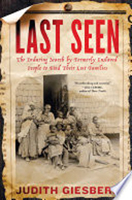
Judith Giesberg. Last Seen: The Enduring Search by Formerly Enslaved People to Find Their Lost Families. Simon and Schuster, 2025. 336 pp. (cloth), ISBN
978-1-982174-32-3.
H-Net Book Review, published by H-Slavery, https://networks.h-net.org/h-slavery (July 2025).
Reviewed for H-Slavery by Evan Kutzler (Western Michigan University).
Last Seen demonstrates the power of its companion project, Last Seen: Finding Family After Slavery (link), launched by Judith Giesberg and her Villanova University graduate students in 2017. The Last Seen archive holds newspaper advertisements seeking family information in the decades after emancipation. Such clippings are well known to historians. While individual advertisements have long offered snapshots of the farreaching human costs of the American slave trade, this public-facing database is impressive for its ambitious scale. Giesberg and her students combed through more than 150 newspapers. Their database (as of June 2025) includes nearly five thousand advertisements ranging from 1861 to 1922. That comes out to about one advertisement for every eight hundred enslaved people on the eve of the Civil War. The geographical reach is also illuminating. The collection includes references to freedpeople living on every continent except Antarctica.
Giesberg draws from this vast archive without losing the uniqueness of each advertisement or the individuality of the people connected within. Last Seen describes, but does not dwell on, quantitative patterns that digital history projects often enable. Mothers like Clara Bashop in Morristown, New Jersey, or Hagar Outlaw in Raleigh, North Carolina, looked for children sold away years earlier. Fathers like Tally Miller asked about children he left behind when his owner took him from South Carolina to Louisiana. Men and women like Henry Tibbs in Yazoo County, Mississippi, or the Andersons of Mineola, Texas, drew on vivid but distant memories of mothers and siblings. United States Colored Troops veterans like Henry Saffold sought to find comrades who could write affidavits needed to prove his eligibility for a disability pension. Place-names, surnames, and enslaver names could make the difference between a successful search and silence. "The Freedom Generation's story," Giesberg writes, "is about love and hope -- hope that the ads they placed in the papers would bring loved ones back to them, that they would be able someday to remake in freedom what had been unmade in slavery" (p. xv). The vast majority of information seekers, perhaps 98 percent, did not receive a reply.
Following the patterns of the Last Seen archive, Giesberg's chapters follow ten families from slavery and freedom. "Each ad opened a door that might allow us to see how a freed person sought answers," Giesberg writes. "Each of the ten chapters that follow tells the stories of freed people searching for lost loved ones and working to rebuild their families during a period of dramatic postwar social change" (p. xxii). The chapters in Last Seen demonstrate how students, public historians, and descendants might understand the thousands of other people in the database. Individualizing this history reveals the opportunities, as well as the limits, of such a database in the age of digital research. Last Seen chooses fragmentary and essential details from meticulous research and frames the findings in local, state, and national context. In doing so, Giesberg is unafraid to cite dead ends when she can find no creek named Pea Ridge or when a family just disappears from the historical record. These moments are subtle reminders about the ill-fitting relationship known to history and the vastness of the past. It also is a reminder of the limits of databases, search engines, and history writing. Dead ends in the past often remain so even with the power of databases and search engines.
Last Seen does more than individualize these longed-for reunions. Giesberg recreates the informational context in which seekers hoped that the right words in the right newspaper would find loved ones. Here, Giesberg's interpretation reflects the specific era of communication marked by intersection of print and verbal cultures. When nineteenth-century Americans talked about the "grapevine telegraph," they remarked with awe on the speed of information. The grapevine telegraph was as unreliable as it was inescapable with hopes and fears driving and reshaping words and ideas. "The grapevine followed enslaved people wherever they went, transmitting bits and pieces of news about where loved ones went and who was left behind," Giesberg writes. "When freed people began looking for their sons and daughters, this intelligence served as a rough road map of where to begin" (p. 43).
Published information could initiate a burst of activity on the grapevine telegraph by readers and listeners at home, in church, on the job, and in a public space. This was the foundational logic and wishful thinking behind the "last seen" advertisement. A request for information about a skilled shoemaker named Henry, placed from Mineola, in the Richmond Planet, relied on the economic network of a tradesman as well as the reach of words far beyond local printing. In this case, someone in Louisiana connected Susan Anderson in Texas and Henry Burruss in Virginia. "Her story is a testament to her determination," Giesberg writes (p. 100). It also speaks to the faith people placed in the mysterious and fickle grapevine telegraph that could turn painful memories into reunion.
Neither Giesberg nor the Last Seen collection treats newspapers equally. Advertisements placed in white newspapers focused on entertaining their core readership. This motivation shaped how stories of Black families appeared in print. When the New York World printed a story about Clara Bashop, it sensationalized the mother's distress while softening the history of slavery and the slave trade. In 1885, Chicago's Daily Inter Ocean described the reunification of Emeline Hall and Julia Vickers in Battle Creek, Michigan. It followed the selective tradition of underground railroad memory common to the region. The bittersweet reunion became an opportunity for white editors and readers to look back nostalgically on the underground railroad, seizing "for themselves and their communities an inheritance of virtue" (p. 140). Such newspapers packaged human interest stories while writing little to nothing about the people at the center of the reunion.
White newspapers also used the search for family to turn African American pain into humor for white readers. Editors raced to the bottom in transforming Alfred Tennyson's poem "Enoch Arden" (1864), a romantic tragedy about long-separated wives and husbands, into a racist comedy. "Often the subjects of these stories remained unnamed," Giesberg writes, "as the aim was not to acknowledge the pain of losing a spouse but rather to amuse readers with accounts of hapless and lovesick ex-slaves, plantation love stories set in the modern day" (p. 188). There were real encounters between long-lost husbands and wives, but these uncomfortable reunions were "more likely to end in ambiguity than over a Christmas dinner" (p. 216).
Giesberg's cautionary note about the "Enoch Arden" stories works for other long-sought reunions in the Last Seen collection. While Giesberg argues that the ads express the love and hope of a generation, her chapters reveal a necessary ambiguity about what these ads and the rare reunions meant. What did resolution look like? The few who found who they were looking for could not get back lost time. Even happy reunions contained complex emotions and unfilled voids left by time, distance, and memory.
Promising areas left to be further explored in Last Seen include the relationship between these ads and inheritance as well between these ads and the Black church. Some of the writers owned property and one motivation for finding family was to find next of kin. Advertisements thus served as a necessary part of estate planning and show freedpeople building wealth across generations. Many of these ads were also read before Black congregations, and the church was an important part of the grapevine telegraph. These implied links might be made more explicit. What relationship existed between these ads and property accumulation? How did these advertisements bridge social history and religious thinking in the Black church? Last Seen offers great insight into the backstories of ten advertisements. Its corresponding database -- a remarkable accomplishment and gift for future researchers -- offers outstanding historical sources arranged for easy use.
[Citation: Evan Kutzler. Review of Giesberg, Judith, Last Seen: The Enduring Search by Formerly Enslaved People to Find Their Lost Families. H-Slavery, H-Net Reviews. June, 2025. This work is licensed under a Creative Commons Attribution-Noncommercial-No Derivative Works 3.0 United States License. H-Net permits the redistribution and reprinting of this work for nonprofit, educational purposes.]
[Return to table of contents]

©2025 African Diaspora Archaeology Network
Copyright and all rights reserved by
individual authors for each article.
Please send comments, suggestions,
or questions to the editor
Last updated: December 30, 2025
Text only menuSearch
|