
September 2026 NewsletterISSN: 1933-8651
In this issue we present the following articles, news, announcements, and reviews:
Article
News and Announcements
Call for Proposals and Conferences
New Books
The Spirit of Marronage:
Expressions of Afrikan Indigenous Self-Determination
Towards an Archaeology of African Presence
in Bahrain: Pottery, Toponyms, and Historical Contexts
Black Feminist Theories: Transnational Approaches
Good Sediment: Black Ecologies and
the Politics of Restoration in Coastal Louisiana
Zora Neale Hurston
Connections, Complexity and Contributions:
Africa's Later Holocene Archaeology in Global Perspective
Black Appalachia: Race, Place, and Identity
Gullah-Geechee Diasporas: Knowledge,
Culture, and Black Lowcountry Legacies
Little Liberia: A Dream of
Black Freedom in the US-Mexico Borderlands
Captive Ecologies: The Environmental Afterlives of Slavery
Afroindigenization: A Theory of Grassroots Cultural Practice
Resistance in New England Slavery: Venture's America
Seeking Freedom in Indian Country: Slavery,
Sovereignty, and Resistance within the Five Tribes, 1790–1861
Stories in the Seams:
A People's History of Black Quilts and Their Makers
The Carib, Kalinago, and Garifuna Peoples:
Indigeneity, Hybridization, and Mobility in the Americas
Gloria Rolando: Memory, Liberation,
and the African Diaspora through Cuban Film
Book Review
|
Imprints of Trans-Atlantic Slave Trade in Badagry: Notes from Retreat
and Excursion Experience of Crawford University Representatives
By Alaba Simpson and Peter Mesewaku
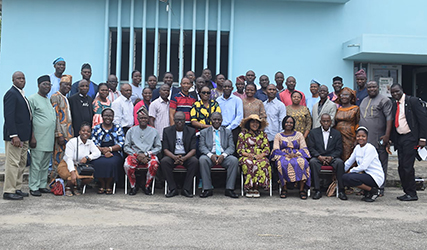
Varied forms of slavery and captive labor systems have existed in human societies over past millennia. In the areas where the Trans-Atlantic Slave Trade was in operation, its impacts upon the socio-cultural heritage of particular populations are often showcased in nodes of cultural heritage tourism. Such heritage tourism typically relies on museums for curating and disseminating information about those histories. Badagry is a foremost tourist location in Nigeria, with the history relating to the Trans-Atlantic Slave Trade being increasingly and significantly preserved and presented through themes of heritage tourism. The impact of the European system of slavery along the coast of Badagry continues to reflect upon the everyday life of the people in that region, as the related structures of museums, international tourism, and memorialized slave trade routes remain focal points within Nigeria and other regions.
Badagry has emerged as a prominent focus of African diaspora and slave history heritage tourism. Crawford University is located in proximity to Badagry and Igbesa in Ogun State, Nigeria. As a result of that spatial and historical relationship, representatives of the university undertook an excursion and retreat in 2023 which focused upon the local, heritage sites of slavery impacts. This article was prepared by Alaba Simpson, a professor at Crawford University at the time of the retreat and excursion, and Peter Mesewaku, an Assistant Curator and tour guide of the Badagry Heritage Museum, to provide both outsider and insider perspectives on those experiences of learning from the preservation of history relating to the Trans-Atlantic Slave Trade in Badagry.
[Read or download this full article here in Adobe .pdf format >>>].
[Return to table of contents]
Recent Dissertations and Theses on Archaeology, History, and Heritage

The following, non-exhaustive list of dissertations and masters theses on African diaspora archaeology and history for the period of September 2025 to September 2026 was compiled by Chris Fennell based on listings in the Proquest.com service. The September 2005, 2006, 2007, 2008, 2009, and 2010 issues of the African Diaspora Archaeology Newsletter provided similar compilations of dissertations and theses on archaeology and history for the period of 2000-2010. The September 2022 issue provides a compilation of dissertations and theses in archaeology for 2010-2022. The December 2022 issue provides a compilation of dissertations and theses in history for 2010-2022, followed by annual listings of dissertations and theses in archaeology, bioarchaeology, heritage, and history in September 2023, 2024, and 2025. If you are aware of other recent dissertations, please email me, and I will include the information in a future newsletter edition. The studies listed below are doctoral dissertations (PhD) or master's theses (MA or MS), and are listed in chronological order by year and then alphabetic order by the author name within each year. Abstracts and full texts are available online from the Proquest.com service.
Archaeology
Known as a Welcoming Place: The Construction of Community and Memory in the Vineyard Highlands, Oak Bluffs, Massachusetts, 1870-1950, by Jeffrey J. Burnett, PhD, Michigan State University, 2026.
The John 'Jack' Hopkins House: Excavating Black History in Gettysburg's Third Ward, by James D. Duke, MA, Indiana University of Pennsylvania, 2026.
Beyond the Mansion: Black Women in Tenant Farming and the Material Culture at Rose Hill Plantation Union, SC, by Caroline Elizabeth Hall, MA, University of South Carolina, 2026.
The Third Maroon War: Indigenous Archaeology and the Fight Against Neocolonialism in Jamaica, by Zenzi Marion Moore-Dawes, MA, San Francisco State University, 2026.
Feeding the Atlantic World: African Women, European Men, and Foodways on Bunce Island, Sierra Leone (1670s-1850s), by David Aanuoluwa Okanlawon, PhD, Syracuse Universit, 2026.
Hidden History: Community Knowledge and the Rediscovery of an African American Potter's Field in Hopewell, Virginia, by Kelly Marie Miles Pratt, MA, University of Maryland, College Park, 2026.
A Taxonomic Analysis of the Faunal Assemblage From the 2023 Archaeological Investigation at Evergreen Plantation (16SJB63), by Thomas Robert Brandon, III, MA, Florida State University, 2025.
Farm Tenancy and Brightleaf Tobacco: An Archaeological View of Economics and Decision-making in Rural Southside Virginia in the Nineteenth and Early Twentieth Centuries, by Graham Alan Callaway, PhD, College of William and Mary, 2025.
The Empire Pushes Back: Decolonizing Archaeological Practices through Critical Ethnography in Carriacou, by Annie Christina Caruso, PhD, University of Oregon, 2025.
Uncovering Landscapes of Labor: The Contributions of the Citrus Lime Industry to Socioeconomic Transformations in the Post-Emancipation Lesser Antilles, by Samantha M. Ellens, PhD, Wayne State University, 2025.
Fort Brooke After 200 Years: A Public Heritage Approach, Alex F. Fawbush, MA, University of South Florida, 2025.
Archaeobotany in US Black Heritage Contexts: A Scoping Review, by Jordan Griffin, MA, University of California, San Diego, 2025.
From Sun-up to Sun-down: A Bioarchaeological Study of Stress and Community Care Practices During Chattel Slavery in Colonial New Amsterdam (New York City), by Kendra Briana Isable, PhD, 2025.
Archaeology of Marronage in Dondon (Saint-Domingue): Social Networks and Rebellion, by Camille Louis, PhD, 2025.
The Importance of Intra-Site Variability in Data Analysis on Southern Plantations as Demonstrated by the Kingsley Plantation Slave Cabins, by Karen E. McIlvoy, PhD, University of Florida, 2025.
Excavating Expertise: Black Women, Misogynoir, and Archaeology, by Nala K. Williams, PhD, Yale University, 2025.
History and Heritage
A Cultural Landscape Analysis of Early Twentieth Century Plantation Based Golf Courses in the Charleston Metropolitan Area, by Thomas A. Darrah, MA, Clemson University, 2026.
The Unwritten Archive: Design as a Reflection of the Layered Experiences of Black Womanhood, by Deana Marie Dieujuste, MFA, University of Texas at Austin, 2026.
The Black Palimpsest: Rewriting the Body and Space through Ancestral Memory and Movement, by Tristian E. Griffin, MA, Duke University, 2026.
Building a City From the Kitchen, Up: Culinary Labor and Racial Power From the Plantation to Bourbon Street, New Orleans, by Gabriel Holliday, MA, San Diego State University, 2026.
The Terra's Terreiro: Religion, Race, and Environmental Philosophy in Brazil, by Travis Knoll, MS, University of North Carolina at Greensboro, 2026.
Plotting Emancipation: Formerly Enslaved Women's Foodways in Barbados, by Emma Lea Roberts, MA, University of Oregon, 2026.
Negro Spirituals: The Long Journey West, by LaVell Thompson, Jr., PhD, University of Nevada, Las Vegas, 2026.
Preservation of Family: The Noisette's Journey From Saint Domingue to Charleston, SC., 1780–1860, by Brigid Wallace, MA, Lehigh University, 2026.
Sankofa: A Relic of the Transatlantic Slave Trade and a Conciliator of Pan-Africanism, by Bernice Franklina Abolga, MA, University of Kansas, 2025.
Growing Food, Eating Medicine: Agricultural Festivals and Spiritual Ecology in Africa's Gold Coast (Ghana), by Ishmael Noye Annang, PhD, Georgetown University, 2025.
Embodied Violence: Slavery and Settler Colonialism on America's Third Coast, by Leila K. Blackbird, PhD, University of Chicago, 2025.
Birthing Black Power: Religion, Positive Black Self-identity Development and the Peculiarity of American Christianity, 1878-1917, by Daryl G. Bloodsaw, PhD, University of Georgia, 2025.
Que(e)rying Black Intimacies and Spanish Colonial Archives, by Bree Booth, PhD, University of California, Santa Cruz, 2025.
Captivities and Transformations: Slavery, Religion, and Emotion in Cartagena de Indias and Providence Island, 1620-1650, by George Clay, PhD, 2025.
Communicating Resistance in U.S. Memoryscapes: Black Memory, Temporality, Hauntings, and Tourism at the Whitney Plantation and the Myrtles, by Shelby R. Crow, PhD, Colorado State University, 2025.
The Role Slavery Played in the Development of the Modern World Economy and Capitalism, by James M. De Huelves, MA, University of Michigan, Flint, 2025.
Asylum for Jim Crow: State Mental Hospitals for African Americans in the Upper South Atlantic Region 1865-1965, by Jamie L. Ferguson, PhD, University of Delaware, 2025.
Overcoming Moonlight and Magnolias: Holistic Strategies for Recovering Enslaved Stories in Plantation Museums, by Adam T. Foreman, PhD, Valdosta State University, 2025.
Navigating Freedom and Belonging: Black Diaspora, Foreign Expertise, and Resistance in New Granada, 1760s-1800s, by Spencer Gomez, PhD, University of California, Irvine, 2025.
How the Story Is Told: An Examination of Narratives and History at the Hampton National Historic Site, by Michael Guy, PhD, George Washington University, 2025.
Slave Patrols and Police in Missouri, by Spencer Hielkema, MA, Southern Illinois University at Edwardsville, 2025.
Excavating the Silenced History of Slavery and Race in Morocco, by Khadija El Karfi Joss, PhD, Boston University, 2025.
Paleogenomics at the Intersection of Ancestry and Community in Contexts of the African Diaspora, by Kalina Kassadjikova, PhD, University of California, Santa Cruz, 2025.
Stitching Pathways Through the Plantation: Black Practices of Mobility and Belonging in the New World, by Alison Hall Kibbe, PhD, Yale University, 2025.
Reframing the "Slave Landscape": Interpreting Slavery at Virginia's Presidential Plantation Museums, by Alyssa Moorman, MA, University of Arizona, 2025.
Scenes from the Domestic Sphere: The Ambivalent Experiences of Enslaved Women in the Fourteenth-century Crown of Aragon, by Mildred Evelyn Sommers Murray, MA, University of Toronto, 2025.
Seeing Bahia on the Limits of Photographic Representation in Black Brazil 1835–1977, by Oluremi C. Onabanjo, PhD, Columbia University, 2025.
Archaeology of Anguilla's Hughes Estate, and Black Liberatory Inter-Island Social Networks in the Leeward Islands, 1730s-1840s, by Elysia M. Petras, PhD, Temple University, 2025.
Desert Slavery: How the Old Spanish Trail Sustained Captivity and Coerced Labor in the North American West, by Kristen Lynn Phipps, PhD, University of Nevada, Las Vegas, 2025.
Commerce of Souls: Slavery's Transformation After the 1808 Abolition, by Makenzie Wiley-Priori, MA, Texas A&M University, 2025.
[Return to table of contents]
Open Access Articles from the
Journal of African Diaspora Archaeology and Heritage
The Journal of African Diaspora Archaeology and Heritage (Taylor & Francis Press) includes open access articles. You can find these on the journal website (link). Examples of articles currently available with free access include:

"Self-Sufficiency, Uplift, and Living Well: Archaeologies of Care in the African Diaspora," by Laurie A. Wilkie. Abstract: Douglas Armstrong has been an important academic mentor and inspiration for many in the field of African Diaspora Archaeology. In this article, I muse about how the concept of "care," as derived from Critical Disability Studies, is both a potentially generative idea for thinking through African Diaspora archaeologies, but also a fitting descriptor of the role Professor Armstrong has held for many in the field. Keywords: Critical disability studies, care webs, social uplift, Buffalo soliders, domestic labor, midwifery, Douglas Armstrong, mutual support (article link).
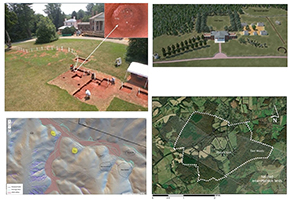
"Community as Client: A Descendant-Based Archaeological Research Approach at a Presidential Plantation Site," by Matthew Reeves and Elizabeth McCague. Abstract: The Clientage Model, as defined by Dr. Michael Blakey, is one in which archaeologists give descendants connected with a heritage site primacy in defining the research and interpretive agenda directed toward their ancestral material record. We have descendants guide our approach to the archaeological record at the site of the Montpelier plantation in Virginia, once owned by President James Madison. Descendants of enslaved Americans have raised questions regarding how the archaeological record reflects their ancestors' intellectual contributions. This has helped us rethink our approach to interpreting the archaeological record and moved us toward an archaeology of intellectual labor across the landscape. Here we explore the insights gleaned from this perspective and how this has changed our collective understanding of the plantation landscape. From this work, descendants have termed the larger archaeological record an ancestral memory device and have become a primary partner in preserving this resource. Keywords: Descendant-based archaeology, historical archaeology, landscape archaeology, plantation archaeology, community archaeology, intellectual contributions (article link).
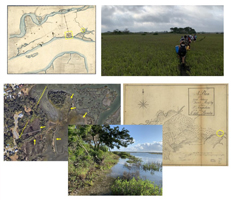
"Waiting on the Tide: Climate Change, Cultural Heritage, and Legacies of Anti-Blackness at Fort Mose," by Mary Elizabeth "Liz" Ibarrola. Abstract: Colonial Florida was a legal and jurisdictional borderland, within which many Afro-diasporic peoples negotiated to best protect their freedoms. However, they also found that emergent ideas about race were shaping the negotiation, circumscribing their options, and working to define a marginalized position for them within Florida society. The site of Fort Mose exemplifies this history and the challenges confronted by Afro-diasporic people within it. Furthermore, the threats to heritage preservation currently faced at the site highlight the ways which anti-Black ideology and action have had a persistent effect on the site, from its inception through the present day. Fort Mose was vulnerable by design. While it is today recognized for its symbolic role in the colonial era, as a site of Black heritage it is threatened not only by rising sea levels and increased storm activity, but also a historical legacy of marginalization. Keywords: Florida, climate change, environmental racism, African diaspora, cultural heritage (article link).
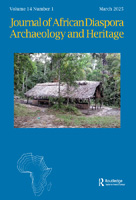
"We Remember Through the Spirit: Yoruba Intangible Heritage, Diasporic Belonging, and the Cultural Work of Aladura Churches in the UK," by Anna Catalani. Abstract: This paper explores how Aladura Churches sustain, adapt, and mobilize Yoruba intangible heritage – understood as oral traditions, rituals, music, and dance – to foster cultural identity and decolonial belonging in diasporic settings. Emerging in twentieth-century Nigeria and now established in the UK, Aladura Churches use heritage practices both as faith expressions and as tools for identity-building, continuity, and resilience. The article has two aims: first, to examine how these traditions are reinterpreted transnationally, reshaped to meet the spiritual and social needs of diasporic communities; and second, to assess how Aladura Churches' digital platforms function as spaces of cultural resistance, challenging marginalization and asserting diasporic identities. The paper argues that by integrating Yoruba heritage into sacred and civic life, Aladura Churches engage with global discourses on decolonization, multicultural citizenship, and heritage preservation. By doing so, they offer a decolonial model of heritage that reclaims memory, redefines legitimacy, and broadens cultural recognition in contemporary Britain. Keywords: Yoruba intangible heritage, Aladura churches, diasporic cultural resilience, decolonial heritage discourse, UNESCO intangible heritage convention, diaspora studies, religious practices, community heritage preservation (article link).
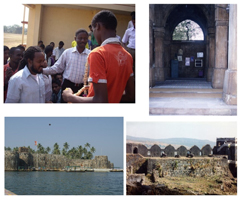
"Introducing African Mobilities and Heritage in the Indian Ocean World," by Shihan de Silva Jayasuriya. Abstract: As the United Nations International Decade for People of African Descent was approaching its end (2015–2024), the contributing authors were invited to write articles in order to complement its pillars: Recognition, Justice and Development. Whilst the articles were in progress, the UN adopted a second decade recognizing work that needed to be completed in order to address the full human rights of people of African descent. Recognition of People of African descent in the Indian Ocean World emanating from involuntary migration is a crucial part of bringing about justice. Building our episteme of African migrations continues as we enter the Second International Decade for People of African Descent (2025–2034). Keywords: African Heritage, Indian Ocean region, slavery, marronage, Sri Lanka, military, labour, abolition (article link).
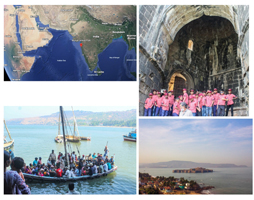
"Island Fort Janjira: Living Memories and Heritage," by Beheroze Shroff and Sonal Mehta. Abstract: An independent princely state (1621-1948), Janjira Fort and extended territories on the West Coast of India were governed by African Muslim rulers called Nawabs. This paper explores Janjira as a centre of trade and heritage tourism. We discuss protecting the Fort's cultural heritage and legacy of cosmopolitan communities who lived and worked in Janjira for generations. Our research is based on oral narratives and vivid memories of Indians of diverse backgrounds who served the Nawabs. History lives in their reflections of Janjira, as a unique place of the cultural formation of a microworld, arising from global processes of trade and commerce which defined its diverse racial and ethnic composition. We also offer the perspectives of descendants of the last Nawab of Janjira State. We conclude that Janjira Fort and the tombs of the Nawabs are heritage structures, an integral part of African History in India and need urgent attention for their preservation. Keywords: Sidis, Janjira Fort, living memories, heritage and tourism, cosmopolitanism, Indian Ocean (article link).
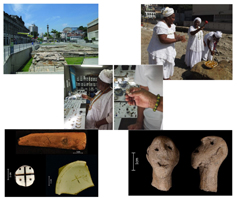
"Valongo, the Place of the Ancestors: Spiritual Practices among Enslaved Africans in Nineteenth-century Rio de Janeiro," by Tania Andrade Lima. Abstract: In 2017, UNESCO added Valongo Wharf to its list of World Heritage Sites. Located in Rio de Janeiro's Port Zone, the wharf is a place of memory associated with the transatlantic slave trade, which has been compared to other sites that have witnessed intense human suffering, such as Auschwitz, Hiroshima and Gorée Island, among others. This chapter explores the spiritual practices of the "wretched of the Earth," as Frantz Fanon named those Africans dehumanized by European colonialism. More specifically, it focuses on the Africans shipped to Valongo to be sold as slaves in Rio de Janeiro and who left vestiges of their spiritual beliefs, recovered through archaeological research. Here, these remains are analyzed from a decolonial perspective, born from the reflections of critical Latin American thinkers who reject the diverse forms of domination and oppression inflicted by Northern hemisphere powers on subaltern populations of the global South. Keywords: Valongo Wharf, urban slavery, spiritual beliefs, decolonial thought, diasporic communities, historical archaeology, archaeology of the African diaspora, descendant communities (article link).
[Return to table of contents]
Yale Announces 2026 Frederick Douglass Book Prize Finalists
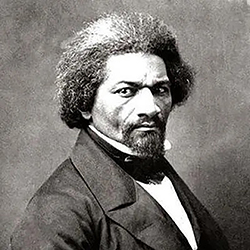
New Haven, Conn., Sept. 1, 2026. Yale University's Gilder Lehrman Center for the Study of Slavery, Resistance, and Abolition (Gilder Lehrman Center or GLC) has announced the finalists for the twenty-eighth annual Frederick Douglass Book Prize, one of the most prestigious awards for global studies of slavery, opposition to it, and the experiences and resistance of enslaved people. Jointly sponsored by the Gilder Lehrman Institute of American History in New York City and the Gilder Lehrman Center for the Study of Slavery, Resistance, and Abolition at Yale University's MacMillan Center, this annual prize of $25,000 recognizes the best book written in English on the topics of slavery, resistance, or abolition copyrighted in the preceding year.
The three finalists for the 2026 prize are: Kim F. Hall for "The Sweet Taste of Empire: Sugar, Mastery, and Pleasure in the Anglo Caribbean" (University of Pennsylvania Press); Casey Schmitt for "The Predatory Sea: Human Trafficking and Captivity in the Seventeenth-Century Caribbean" (University of Pennsylvania Press); and Daniel Lord Smail for "Magdalena Coline: A Life Beyond Slavery in Mediterranean Europe" (Princeton University Press).
The winner will be announced following the Frederick Douglass Book Prize Review Committee meeting in the fall, and the award will be presented at a celebration at Trinity Church Wall Street in New York City in February 2027.
From a total of 95 submissions, the finalists were selected by a jury of scholars that included Diana Paton (chair), William Robertson Professor of History, University of Edinburgh; W. Caleb McDaniel, Mary Gibbs Jones Professor of Humanities and Professor of History, Rice University; and Tiya Miles, Michael Garvey Professor of History and Radcliffe Alumnae Professor at the Radcliffe Institute for Advanced Study at Harvard University.
"We read many powerful and deeply researched works," jury chair Diana Paton observed. "The shortlist can only acknowledge a small fraction of the excellent research published on slavery, emancipation and resistance in 2025."
[Read this full article online. >>>].
[Return to table of contents]
Call for Proposals:
Restorative Justice in Heritage Studies & Archaeology
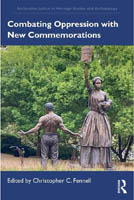
The Restorative Justice in Heritage Studies and Archaeology book series, published by Routledge Press and edited by Richard Paul Benjamin (University of Liverpool), Christopher C. Fennell (University of Illinois), and Nedra K. Lee (University of Massachusetts), seeks proposals for single-author, multi-author, or edited books. Restorative justice in heritage and archaeology embraces initiatives for reconciliation of past societal transgressions using processes that are multivocal, dialogic, historically informed, community based, negotiated, and transformative. This series will present works that promote the active and often unconventional ways that archaeologists, historians, and heritage scholars are contributing to a process of remaking. Our authors work to define and illuminate the best practices for restorative justice in these fields and to identify how practitioners and their collaborators are working to redress, reconcile, and remake contemporary society.
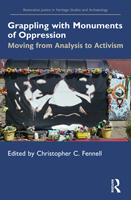
Such restorative justice efforts typically focus on multiple perspectives and modes of reconciliation, rather than a narrow vision of retribution and punishment. Reparation initiatives are often multivocal, layered, multiplex, and visionary in this way. Restorative justice initiatives often occur through such a collaborative process which entails relationship building and story-telling, accountability and truth-telling, and reparative engagement.
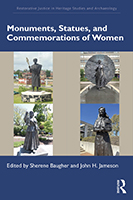
Our first volumes in the series are Grappling with Monuments of Oppression: Moving from Analysis to Activism (link), Combating Oppression with New Commemorations (link), and Monuments, Statues, and Commemorations of Women (link). Another edited volume now in press addresses "archaeologies with heart."
Interested in proposing a book for this series? Contact one of us: Nedra.Lee@umb.edu, Richard.Benjamin@liverpool.ac.uk, or cfennell@illinois.edu.
General guidelines for authors are available from Routledge Press.
Follow this initiative through our website, and on Facebook.
[Return to table of contents]
Call for Proposals:
Transatlantic Slavery and the Archive
UK National Archives, June 21-22 2027
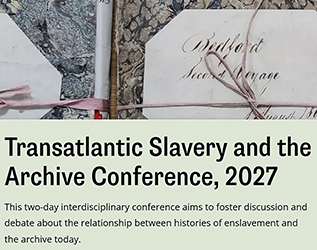
Histories of transatlantic slavery have long been shaped by the archive. This has led researchers to confront the fact that records of transatlantic slavery were overwhelmingly written by or for enslavers. Influential critiques by Michel-Rolph Trouillot (Silencing the Past, 1995) and Saidiya Hartman (Scenes of Subjection, 1997; "Venus in Two Acts," 2008) have highlighted the relationship between archival production, power, violence and historical silence. They have shown how the lives of enslaved people are often fragmented, obscured, or wholly absent from the documentary record.
Further interventions rooted in Black feminist thought and postcolonial studies, such as Stephanie Smallwood's Saltwater Slavery (2007), Marisa Fuentes' Dispossessed Lives (2016) and Jessica Marie Johnson's Wicked Flesh (2020), have built on these insights. Their work exposes the limits of such sources and helps to develop methods for engaging with archival gaps and silences. More expansive and creative practices have followed. These often look beyond official documents to bring in other forms of what the writer Toni Morrison called "memory work."
Yet the historical value of the archive endures, as researchers continue to show how the vast records of enslavement can enrich understanding of Atlantic history across disciplines. Shifts in archival practice across organisations also play a significant role. The selection, preservation, organisation, and accessibility of records profoundly impact how histories of enslavement are surfaced and engaged with.
This two-day interdisciplinary conference aims to foster discussion and debate about the relationship between histories of enslavement and archives today. It will explore:
How were archives documenting transatlantic slavery formed, and for what purposes?
What do archival sources tell us about transatlantic slavery, what do they omit and what do these silences tell us?
Are there types of archives or sources that have been overlooked when reconstructing histories of transatlantic slavery?
How can we challenge and resist the limits of the archive to centre the experiences of the enslaved?
How have developments in archival practice shaped research into transatlantic slavery?
How has the digital turn transformed how we encounter archives of enslavement?
How can archives of transatlantic slavery best serve descendant communities, and how can access and engagement be expanded?
The National Archives invites proposals for presentations, panels and roundtable discussions for the Transatlantic Slavery and the Archive conference. We are interested in new research into transatlantic slavery rooted in archival sources, as well as reflections on how archival practice and digital approaches have shaped histories of enslavement. The conference is not limited to records held at The National Archives and considers archival practice across the sector in the UK and globally.
For more information on potential themes and how to apply, please see the conference webpage: Transatlantic Slavery and the Archive. The deadline for submissions is 17.00 (GMT/UTC+0) on Monday 14 December 2026. Contact email: research@nationalarchives.gov.uk. Conference website link.
[Return to table of contents]
Call for Proposals:
Diasporas, Dreams, and Dominions in Vast Early America
30th Omohundro Institute Annual Conference
Howard University, Washington, DC, June 17-19, 2027
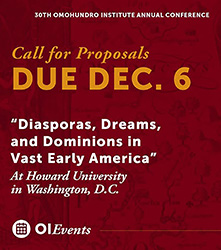
The 30th Omohundro Institute Annual Conference will take place in Washington, DC, and be hosted by the History Department and Moorland Spingarn Research Center (MSRC) at Howard University from Thursday, June 17 to Saturday, June 19, 2027.
The program committee, co-chaired by Frederick C. Knight (Howard University) and Thomas A. Foster (Howard University), invites papers on all topics in vast early American history. Given our hosts, location, and conference theme -- Diasporas, Dreams, and Dominions in Vast Early America -- the committee would be especially interested in proposals that consider (either separately or as intermeshed problems) Black Atlantic/African Diaspora histories; African American histories; histories of slavery, abolition, and emancipation; Native and Indigenous histories; mid-Atlantic histories; public history; and historical memory (especially national narratives).
Proposals are due December 6, 2026. Learn more and register at https://oieahc.wm.edu/events-overview/events/30th-oi-annual-conference/.
[Return to table of contents]
New Book
The Spirit of Marronage:
Expressions of Afrikan Indigenous Self-Determination
Edited by Ping-Ann Addo, Diana J. Fox, and
Nana Barouda Lubafu Isieni (Cynthia Ellis-Topsey)
Vernon Press
728 pp., ISBN: 9798261600602, 2026.
Description from the Publisher:
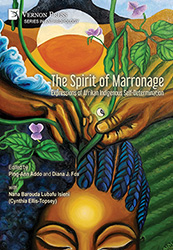 The Spirit of Marronage: Expressions of Afrikan Indigenous Self-Determination chronicles the rise of the United Maroon Indigenous Peoples (UMIP), a global movement rooted in the spiritual and political legacies of Afrikan-descended Indigenous communities. Interweaving scholarly discussions, critical personal narrative, poetry, visual art, and Indigenous curricula, the book explores sovereignty through land-based relations, communal governance, and sacred practices. It documents pivotal Maroon gatherings and outlines UMIP's six founding pillars: Kpaale (Diasporic Citizenship and Spirituality), Mbongi (Learning Together), Uhuru (Freedom and Reparations), Gayap (Working for Common Cause), Ujima (Collective Responsibility), and Livity (Living Maroon Values). Serving as both an archive for Maroons and a guide for Indigenous Peoples reclaiming culture, it calls for shifts in academic engagement toward authentic allyship -- centering Indigenous knowledges to transform relationships from transactional to reciprocal, and analyses from removed to restorative. A vital resource for educators, researchers, and activists pursuing ecological and social justice.
[Return to table of contents]
New Book
Towards an Archaeology of African Presence in Bahrain:
Pottery, Toponyms, and Historical Contexts
By Awet Araya
BAR International
134 pp., ISBN: 9781407364353, 2026.
Description from the Publisher:
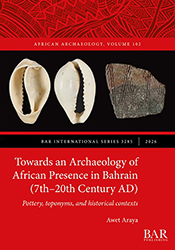 The history of people of African descent in the Arabian–Persian Gulf is long, complex, and largely absent from archaeological scholarship. From pre-Islamic times through the modern period (7th-20th century), Africans moved across the Red Sea and Indian Ocean as traders, migrants, labourers, and communities whose material traces remain poorly understood. This book attempts the first sustained archaeological investigation of the African diaspora in the Gulf, centred on Bahrain as a key node in these transregional networks. Drawing on original excavations and museum collections in Bahrain and beyond, it foregrounds pottery traditions rooted in eastern Africa, particularly the Swahili coast and the Horn of Africa. Combining archaeological analysis with historical, ethnographic, and toponymic evidence, the study demonstrates how material culture can recover African presence where written sources fall silent. The book establishes a new foundation for understanding African presence in the Gulf and opens a long-neglected field of archaeological inquiry.
[Return to table of contents]
New Book
Black Feminist Theories: Transnational Approaches
Edited by Bibi Bakare-Yusuf, Carole Boyce Davies,
Janell Hobson, Angelique V. Nixon, and Christen A. Smith
Bloomsbury Academic
456 pp., ISBN: 9781350446007, 2026.
Description from the Publisher:
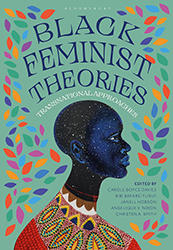 An innovative contribution to the field of Black Feminist Studies, this landmark collection brings together the most influential historical and contemporary thinkers in Black feminist theories across transnational contexts.
Featuring ground-breaking new work alongside canonical essays from key thinkers, this book adopts a truly global approach to its subject. In doing so, it looks beyond North America to showcase a diverse range of continents and perspectives. The collection includes not only standard academic essays, but also vital statements, interviews, manifestoes, and creative work, which transmit and embody Black feminist thought.
The book is broken up into five carefully curated sections: Black Feminist Foundations; Statements and Manifestos; Cultures and Aesthetics; Bodies, Genders, and Sexualities; Black Feminist Futures.
Timely and important, this is an indispensable resource for students and scholars of Black Studies, Women & Gender Studies and Black Feminist Studies, as well as more generally to American Studies, African Studies, Caribbean Studies, and African Diaspora Studies.
[Return to table of contents]
New Book
Good Sediment: Black Ecologies and
the Politics of Restoration in Coastal Louisiana
By Monica Patrice Barra
University of Washington Press
218 pp., ISBN: 978-0295754673, 2026.
Description from the Publisher:
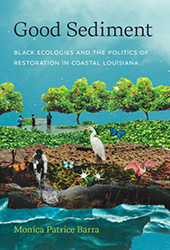 When saving wetlands imperils Black futures, restoration demands reimagination. Coastal Louisiana is losing land at an unprecedented rate, and in response, scientists and policymakers have turned to massive restoration projects to slow the erosion. Good Sediment enters this charged landscape, where the promise of ecological renewal collides with the lived realities of Black coastal communities in Plaquemines Parish.
At the center of the book is the Mid-Barataria Sediment Diversion, the state's most ambitious and controversial project: a $2 billion engineering feat that would redirect the Mississippi River's mud and silt into disappearing wetlands. For policymakers, the river's sediment is salvation. For the Parish's multigenerational Black communities, however, this "good sediment" carries profound risks, including flooding homes and undermining fishing livelihoods.
Through ethnographic research, Monica Patrice Barra traces the multiple meanings of restoration as scientists, engineers, and Afro-descendant communities wrestle with what it means to "work with nature" in the shadow of climate change. She reveals how technical claims of environmental progress often sidestep questions of environmental racism, and how Black communities press instead for restoration that sustains culture, dignity, and intergenerational survival.
Unsettling the assumption that restoration is inherently benevolent, Good Sediment reframes ecological repair as a political and cultural practice -- one that must grapple with the racial histories embedded in the land. This vital work bridges environmental anthropology, political ecology, and Black studies to imagine restoration otherwise: as a project oriented toward protecting Black life.
[Return to table of contents]
New Book
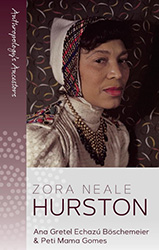 Zora Neale Hurston
By Ana Gretel Echazú Böschemeier and Peti Mama Gomes
Berghahn Books
110 pp., ISBN: 978-1836953517, 2026.
Description from the Publisher:
Exploring Zora Neale Hurston's life and work through a decolonial lens, this book traces Hurston's journey from her early life (1891-1919) and struggles at the margins (1920–1930) to her peak as a pioneering ethnographer and writer (1931-1956) and her later years (1957-1960). Examining her navigation of a hostile academic environment, it highlights her redefinition of Black autonomy and diasporic identity. Through personal and political narratives, including Barracoon, it underscores Hurston's enduring influence on Anthropology and contemporary Black thought.
[Return to table of contents]
New Book
Connections, Complexity and Contributions:
Africa's Later Holocene Archaeology in Global Perspective
Edited by Matthew I. J. Davies, Kevin C. MacDonald, and Sirio Canós-Donnay
McDonald Institute for Archaeological Research
University of Cambridge Digital Collections, ISBN: 978-1-913344-31-3, https://doi.org/10.17863/CAM.134250, Repository link, 2026.
Description from the Publisher:
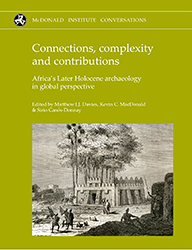 So much of the human past is situated in Africa, yet Africa's later Holocene archaeology has not always been given fair treatment in popular accounts of world prehistory. This volume brings together a number of specialist chapters spanning the continent's last 3,000 years to re-situate Africa's later past within global historical frameworks. The volume is arranged around three themes. Connections examines the latest research on interactions between the continent and other parts of the world including across the Sahara and along the Atlantic and Indian Ocean Coasts. The chapters re-centre Africa not as a passive recipient, but as a key actor in inter-regional processes. Complexity offers a series of detailed accounts that explore Africa's deep socio-political history and that challenge us to re-think the human story as one characterized by a linear move towards coercion, hierarchy and inequality. Contributions explores Africa's rich legacy of contributions to archaeological thought and practice. Here, we also present new original theoretical and methodological approaches that place Africa at the forefront of innovation within the discipline. The book is aimed at archaeologists working both in and beyond the continent and will be essential reading for anyone searching for alternative approaches to global archaeology.
[Return to table of contents]
New Book
Black Appalachia: Race, Place, and Identity
Edited by Cicero M. Fain III, Sheena Harris Hayes, Wilburn Hayden Jr., and William H. Turner
University Press of Kentucky
354 pp., ISBN: 978-1985903975, 2026.
Description from the Publisher:
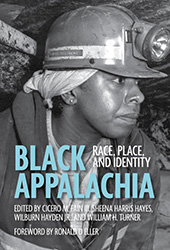 Black Appalachia: Race, Place, and Identity is the long-awaited successor to Blacks in Appalachia (1985), the first modern anthology to examine the socioeconomic, cultural, and political experiences of Black Appalachians. Edited by Cicero M. Fain III, Sheena Harris Hayes, Wilburn Hayden Jr., and William H. Turner, Black Appalachia features more than twenty-five emerging and established scholars and creatives who challenge how we think about the region by finding new answers to persistent questions. Covering topics such as migration, discrimination, the arts, and the links between memory and place, this book demonstrates that Appalachia's Black residents maintain a significant role in shaping the region. It documents a renaissance of ideas, music, poetry, photography, and food and uses innovative scholarship, perspectives, and fields of inquiry to acknowledge the challenges and complexities of the Black experience in Appalachia, both historically and within a contemporary framework that addresses new realities. Black Appalachia expands on the still largely untold story of Black America, reframing legacy and history, highlighting marginalized communities, and celebrating their contributions.
[Return to table of contents]
New Book
Gullah-Geechee Diasporas: Knowledge,
Culture, and Black Lowcountry Legacies
Edited by Muhammad Fraser-Rahim and Elizabeth J. West
University of South Carolina Press
216 pp., ISBN: 978-1643366395, 2026.
Description from the Publisher:
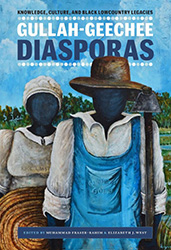 Mapping the Gullah-Geechee diaspora across time and space.
Gullah-Geechee Diasporas counters romantic portrayals of Gullah-Geechee culture as a static, geographically isolated remnant of the past. Across eight interdisciplinary essays, the book's contributors trace an arc, described in time and space, from pre-Middle Passage Africa through the Caribbean and coastal United States into the interior South and beyond. They consider how Gullah-Geechee cultural traditions are simultaneously rooted in the physical Lowcountry homeland and represent a dynamic cultural ethos that is not bounded by geography and has shaped Black life across North America and the Caribbean Basin. Together, these essays reveal the resilience and adaptability of people whose history defies myths of isolation and immobility. Gullah-Geechee Diasporas is a fresh framework for understanding African American cultural origins, migrations, and transformations.
[Return to table of contents]
New Book
Little Liberia: A Dream of
Black Freedom in the US-Mexico Borderlands
By Laura Hooton
University of Oklahoma Press
312 pp., ISBN: 978-0806196961, 2026.
Description from the Publisher:
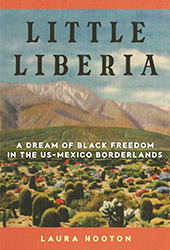 In the early twentieth century, African Americans created an agricultural community in northern Baja California, Mexico, which they called Little Liberia. As a transborder activist community, the people of Little Liberia sought to counter the forces of White supremacy in North America, primarily by building a stable financial and political foundation for African Americans. The story of this community, told in full for the first time in Little Liberia: A Dream of Black Freedom in the US-Mexico Borderlands, is one of Black innovation and cross-cultural enterprise at a time of racial persecution and political turbulence -- a little known but instructive chapter in the intersecting history of Black America and the borderlands of the Southwest.
Organized by African American businessmen chiefly from California and Oklahoma, Little Liberia began as the Lower California Mexican Land Development Company, which strove to build African American economic power through agricultural production outside the nation's borders. Its sister organization, the International Community Welfare League, dedicated itself to fighting the spread of White supremacy by unifying African Americans, Indigenous peoples, and people of Mexican descent. Laura Hooton describes how these entities jointly navigated US-Mexico politics during World War I and the Mexican Revolution, including issues of land ownership, immigration, race and ethnicity, and imperialism and colonialism. Her book traces the community's shifting business focus, geographic scope, and membership over its eleven-year history-its formation in Los Angeles, recruitment in Oklahoma after the Tulsa Race Massacre, expansion of relations with Mexican politicians, and highly public collapse.
Little Liberia was born out of the intersection of Black spaces and borderland places, and its story, in Hooton's deft telling, reveals the crucial role of that intersection in the history of race, borderlands, immigration, social movements, and White supremacy in the United States and Mexico.
[Return to table of contents]
New Book
Captive Ecologies: The Environmental Afterlives of Slavery
By Jennifer C. James
Duke University Press
264 pp., ISBN: 978-1478038924, 2026.
Description from the Publisher:
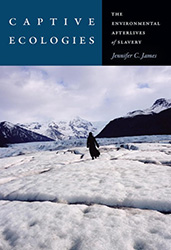 Captive Ecologies makes a case for the ecological significance of slavery's afterlife, tracing the complex entanglements between racial capitalism and Black ecological freedom. Attending to the ways that racial capitalism implicates both captive bodies and captive land, Jennifer C. James brings into relief the harm that racial capitalism does to Black people as well as the human and non-human worlds they inhabit. James looks to a range of case studies and media from the nineteenth, twentieth, and twenty-first centuries, including Black music, ecopoetics, literature, social history, biography, and Black feminist and queer art, tracing the various ways that the environmental stakes of racial capitalism have shaped the Black ecological imagination. In these works, the concept of captivity signals not only slavery but also Black life in the "wake": carceral spaces and enclosures, exploitative economic systems, sacrifice zones, and more. James offers novel concepts and frameworks to generate new modes of ecocriticism that are equipped to grapple with the unique demands and stakes of captive ecologies.
[Return to table of contents]
New Book
Afroindigenization: A Theory of Grassroots Cultural Practice
By Catherine A. John
Duke University Press
244 pp., ISBN: 978-1478033431, 2026.
Description from the Publisher:
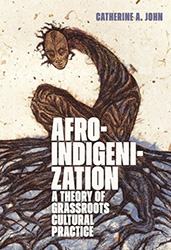 In Afroindigenization, Catherine A. John addresses the underbelly of spiritual resilience shaping a range of African diasporic institutions, traditions, and practices. John argues that repressed forms of indigenous African knowledge systems manifest in a myriad of culturally embodied ways in African diaspora spaces and places. From mermaid lore in rural Jamaica to hip-hop trance-induced dance in Los Angeles to the stories of two debaters turned social media influencers, John shows how the descendants of enslaved Africans express the signs and substance of their Afroindigenous power through collective creativity. Drawing from scholars such as Vèvè Clark, Hortense Spillers, Dianne M. Stewart, and Sylvia Wynter, Afroindigenization exposes the cultural and spiritual ancestries that lie at the heart of modern Black identities and practices.
[Return to table of contents]
New Book
Resistance in New England Slavery: Venture's America
By Isabelle Laskaris
Routledge
200 pp., ISBN: 978-1041358848, 2026.
Description from the Publisher:
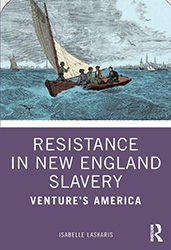 Resistance in New England Slavery: Venture's America offers a comprehensive exploration of the diverse methods of resistance employed by enslaved people in New England between 1650 and 1800.
Drawing on an extensive range of archival sources including newspapers, petitions, court records, and enslaved people's narratives, this book explores how enslaved individuals challenged their bondage, and how enslavers and colonial authorities responded, across the colonial and Revolutionary eras. Organized thematically, the book examines key forms of resistance, including violence, running away, freedom suits, manumission, and petitions for abolition. It uniquely examines Native American and African American slavery side by side, demonstrating how Indigenous resistance shaped African American resistance strategies well into the eighteenth century, and further, how resistance shaped the abolition movement. Ideal for undergraduate and graduate students of slavery, early American history, and the Atlantic world, the volume provides a valuable resource for teaching and research on resistance and abolition.
[Return to table of contents]
New Book
Seeking Freedom in Indian Country: Slavery,
Sovereignty, and Resistance within the Five Tribes, 1790–1861
By Kristen Tegtmeier Oertel
LSU Press
240 pp., ISBN: 978-0807185735, 2026.
Description from the Publisher:
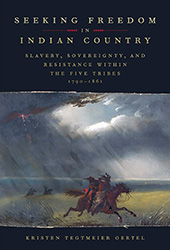 Kristen Tegtmeier Oertel's Seeking Freedom in Indian Country is the first comprehensive study of African chattel slavery within the Five Tribes: the Cherokee, Chickasaw, Choctaw, Muscogee (Creek), and Seminole Nations. Oertel examines how chattel slavery functioned among all Five Tribes before and during the removal process, how the tribes reconstituted slavery post-removal in Indian Territory, and how enslaved Black people promoted freedom-seeking strategies at each stage. Furthermore, her work considers how the conflict over slavery in Indian Territory contributed to the larger national debate over slavery's fate on the eve of the Civil War.
Historians have examined how the practice of African enslavement emerged within one or two tribes, how forced migration affected slavery within particular nations, and how the debate over slavery divided multiple Indigenous nations. Oertel, however, is the first to examine Indian Territory as a whole, its significance to the sectional debates, and its role as an incubator of emancipation policies in the United States. Knitting together these individual tribal narratives and supplementing them with extensive primary research on how slavery functioned across Indian Territory, she integrates Indian country into the antebellum march toward the Civil War.
Seeking Freedom in Indian Country joins a rising chorus of studies that integrate southern and western history, which, by default, also pulls together the history of the so-called Indian Wars with the Civil War. Oertel suggests that we cannot fully understand the causes of the Civil War without also considering the changes brought about by the forced removal of Indians. She argues that settler colonialism and the expansion of African chattel slavery together set the stage for sectional conflict to explode in the West. Ironically, both Indigenous resistance to settler colonialism and Black resistance to slavery challenged white supremacy in ways that foretold the end of slavery but also furthered the settler colonial project.
[Return to table of contents]
New Book
Stories in the Seams:
A People's History of Black Quilts and Their Makers
By Sharbreon Plummer
Chronicle Books
208 pp., ISBN: 978-1797231570, 2026.
Description from the Publisher:
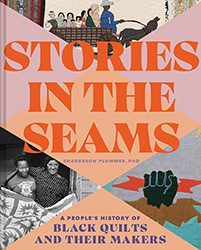 A sweeping survey of Black quiltmaking in America with stunning archival photographs of quilters and quilting bees, as well as full-page reproductions of both significant historical quilts and bold contemporary creations.
This compelling volume gives Black quilting traditions long-overdue attention, highlighting the artistry, innovation, and community solidarity of quilters from the 1700s through today. The deeply researched text of scholar and artist Dr. Sharbreon Plummer explores quilts as an archive of collective and personal memory, delves into methods of Black quiltmaking-both distinctive and endlessly diverse-and demonstrates the power of quilts and quilting as medicine against grief and oppression.
[Return to table of contents]
New Book
The Carib, Kalinago, and Garifuna Peoples:
Indigeneity, Hybridization, and Mobility in the Americas
Edited by Paula Prescod
University of Illinois Press
296 pp., ISBN: 978-0252089640, 2026.
Description from the Publisher:
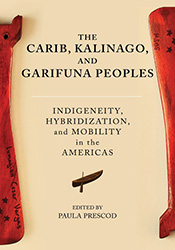 The Indigenous peoples of the Lesser Antilles used the sea and waterways to sow a diaspora across the Caribbean basin and beyond. Their histories all-too-often reflect colonial viewpoints and stereotypes dating back to the region's imperial era. Paula Prescod edits a collection of studies that examine the intermingling and interdependencies of indigenous Caribbean populations and the groups they encountered following the European conquest of the Americas. Works in the first section explore the historical entwinement of the Indigenous, European, and African populations thrown together in the region, and the agency and power each group invested in itself to survive. In part 2, contributors illuminate the complex and dynamic natures of interrelatedness and identification of the descendants of Indigenous populations while seeing the Carib, Kalinago, and Garifuna peoples as a heterogeneous group.
An overdue and wide-ranging reconsideration, The Carib, Kalinago, and Garifuna Peoples presents an invaluable collection of multidisciplinary studies that reposition the three groups' history and experiences.
[Return to table of contents]
New Book
Gloria Rolando: Memory, Liberation,
and the African Diaspora Through Cuban Film
Edited by Andrea J. Queeley, Devyn Spence Benson, and Yesenia Fernández Selier
State University of New York Press
332 pp., ISBN: 979-8855808438, 2026.
Description from the Publisher:
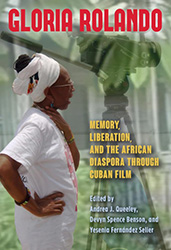 The first comprehensive exploration of the life, work, and legacy of internationally acclaimed Afro-Cuban filmmaker Gloria Rolando.
For over three decades, Gloria Rolando has created films that challenge the erasure of Black history in Cuba and the Americas more broadly. Working independently through her production company Imágenes del Caribe as well as with the Cuban National Film Institute, ICAIC, Rolando has illuminated hidden histories, interrogated narratives of raceless nationalism and mestizaje, and centered the lived experiences of Afro-descendant communities as well as diasporic connections. Gloria Rolando brings together scholars, artists, and activists from Cuba, Latin America, the United States, Canada, and the United Kingdom to explore Rolando's profound impact. Blending personal essays, interviews, film analyses, and archival images, the volume uncovers the power of visual storytelling to honor memory and inspire liberation.
[Return to table of contents]
Book Review
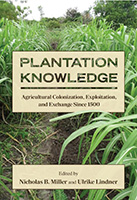
Nicholas B. Miller, Ulrike Lindner, eds. Plantation Knowledge: Agricultural Colonization, Exploitation, and Exchange Since 1500. State University of New York Press, 2025. 340 pp. (cloth), ISBN 979-88-558-0378-5.
H-Net Book Review, published by H-Environment, https://networks.h-net.org/h-environment (May, 2026).
Reviewed for H-Environment by Jonathan E. Robins (Michigan Technological University).
Plantation Knowledge developed out of a 2022 workshop of the same name, but this open-access volume aims to accomplish more than the average collection of conference papers. The editors and contributors to Plantation Knowledge challenge conventional understandings of the plantation as a concept, and as a historical phenomenon. Through ten case studies, the authors complicate recent narratives around plantations and commodity frontiers, narratives that sometimes assume the plantation is a specifically capitalist, Western, or modern form of agricultural production. Looking beyond what the editors describe as the "slave-based and racialized plantations of the Atlantic world" that "loom large in the public imagination" (p. 1), the contributors to this volume show how local ideas and actors participated in the creation of plantation projects through the exchange of ideas, as well as through resistance to and collaboration with plantation systems.
The editors, Nicholas Miller and Ulrike Lindner, offer a straightforward definition of a plantation in the introductory essay. The key attributes of their plantation concept are size, purpose, and organization. For Miller and Lindner there is no magic figure for hectarage that makes an agricultural project a plantation; what matters is the scale of the project in relation to other forms of agriculture in any given case. Plantations are big, and require a different term than a smaller-scale "farm," even if both grow the same plants. And while plantations and small farms may both grow commodities for distant markets, Miller and Lindner argue that the plantation is differentiated through its single-minded focus on commodities. Following Sidney Mintz, they also see the plantation in any given place as a foreign thing, whether it is actually operated by foreigners or is managed by local peoples responding to foreign impulses. Finally, Miller and Lindner argue that plantations rely on "hierarchical, frequently exploitative" systems of labor which often emerged concurrently with the conquest or acquisition of land (p. 1). Taken together, these elements could encompass everything from Roman latifundia to the massive greenhouses covering Spain’s Almería province today, and all of the case studies in this volume easily fit within this scope.
That is no small accomplishment, given that contributions to this volume include cases on South and Southeast Asia, Hawaii, North and South America, western Africa, and Europe. There is an impressive range of chronological coverage as well, with chapters spanning the sixteenth through the twentieth century (with a notable gap in coverage of the eighteenth century). The editors organized the chapters into five thematic sections, although the themes run across most of the chapters. The organization of chapters ultimately reflects chronology, with each section presenting two chapters on cases in close or overlapping time periods.
The first section, "Epistemology," pairs a contribution by Ted McCormick on Ireland and the "political arithmetic" of plantations with Jennifer Saracino’s chapter on economic botany in postconquest Mexico. Both chapters explore the processes through which would-be planters (that is, owners or developers of plantations) attempted to create the conditions for plantation development. Saracino argues that Spanish authorities appropriated Indigenous knowledge of plants and ecology to serve future plans for exploiting Indigenous land and labor. McCormick describes several projects to measure and value the land and people of Ireland. Together the chapters remind us that plantations develop when planters see -- or least think they see -- ways to grow a specific thing, in a specific place, with a specific source of labor, to sell in specific markets.
Chapters by Nicholas Miller (on Hawaii) and Claudia Roesch (Mississippi) challenge conventional ideas about who "planters" were, forming the second section, "Boundaries." Miller’s chapter examines the role of Indigenous Hawaiians in building and managing sugar plantations. The key figure is John Adams Kuakini Cummins, who Miller frames as an anticolonial capitalist who saw plantation development as part of a campaign to maintain Hawaiian sovereignty. Roesch’s chapter traces the history of a plantation at Davis Bend, Mississippi, from its origins as an Oweniteinfluenced slave plantation to a postemancipation experiment that blurred the lines between plantation and commune. Roesch and Miller both emphasize how historical actors who might typically be framed as victims of the plantation complex nonetheless worked within its logic, seeing it as a tool for prosperity and freedom within capitalist, imperialist, and racist systems.
Both contributions to the "Experiments" section might have also been grouped with the earlier chapters on epistemology. Chapters on rubber (by Moritz von Brescius) and sugar (by Christina Skott) return to the problem of knowing what to grow and how to grow it. As von Brescius shows, rubber could be obtained from several wild and cultivated species, and British experts assembled an "imperial portfolio" of plants, locations, and modes of production as they attempted to build the rubber commodity chain (p. 148). In von Brescius’s framing, Hevea brasiliensis -- the default rubber crop by 1920 -- was not "discovered" by plantation experts so much as it was the survivor, as other plants and ways of extracting latex were winnowed away by biology, local politics and priorities, and the global market. Skott’s chapter shifts the focus away from species to labor and technology, charting the rise and fall of sugar plantations in colonial Malaya (including plantations owned by Chinese settlers). Skott argues that the factors that allowed the development of a sugar plantation industry contributed to its demise -- namely, an important but precarious supply of migrant laborers -- and cleared the way for Hevea rubber and other plantation crops in the twentieth century.
Two chapters in the section titled "Institutionalization" address the political economy of plantation systems across changing local and global conditions. Marta Macedo’s chapter examines Belgian efforts to recreate the success of Portuguese cocoa planters on São Tomé in Congo, where cocoa ultimately failed as a crop but served as a test bed for coercive models that were applied to other crops. Theresa Ventura continues with the theme of coercion in a study of coconut plantations in the American-occupied Philippines, where two penal colonies functioned as model plantations.
The final section, "Reform," pairs chapters that examine efforts to change plantation systems. Gillian McGillivray contrasts Brazilian and Cuban experiences with industrialization in the sugar industry. While small-scale planters in Cuba won public sympathy and support from government in their struggles with foreign-owned sugar mills, their Brazilian counterparts were unable to win favorable terms against state-backed domestic industrialists. The last chapter in the collection, Rebekah McCallum’s study of tea planters and their lobby organizations in Assam, shows how plantation industries were able to shape policies that replaced older forms of bondage with new ways of controlling labor.
All of the contributions to the volume are well researched and make important contributions to the global history of the plantation. Each author engages with the overarching theme of "plantation knowledge," but the individual chapters only make occasional use of the concepts the editors lay out in the introductory essay. Some authors make direct connections with other contributions to the volume, but a number of these conversations appear in the endnotes rather than the text. A more robust discussion of the volume’s key themes across the chapters would have been welcome. Still, the editors have successfully compiled ten fascinating case studies, and have done so across the disciplinary boundaries that often prevent substantive conversations among specialists studying various places, plants, and time periods. Taken together, the authors show that plantation methods were not a one-way imposition of capitalist, Western, or "modern" systems on non-Western places and peoples. They also succeed in broadening the contemporary focus in studies of "plantation knowledge" beyond plant, pest, and soil science to include knowledge about people as actual or potential laborers in plantation contexts.
[Citation: Jonathan E. Robins. Review of Miller, Nicholas B.; Lindner, Ulrike, eds, Plantation Knowledge: Agricultural Colonization, Exploitation, and Exchange Since 1500. H-Environment, H-Net Reviews. May, 2026. This work is licensed under a Creative Commons Attribution-Noncommercial-No Derivative Works 3.0 United States License. H-Net permits the redistribution and reprinting of this work for nonprofit, educational purposes.]
[Return to table of contents]

©2026 African Diaspora Archaeology Network
Copyright and all rights reserved by
individual authors for each article.
Please send comments, suggestions,
or questions to the editor
Last updated: October 25, 2026
Text only menuSearch
|